

The Equal Justice Initiative is committed to ending mass incarceration and excessive punishment in the United States, to challenging racial and economic injustice, and to protecting basic human rights for the most vulnerable people in American society.
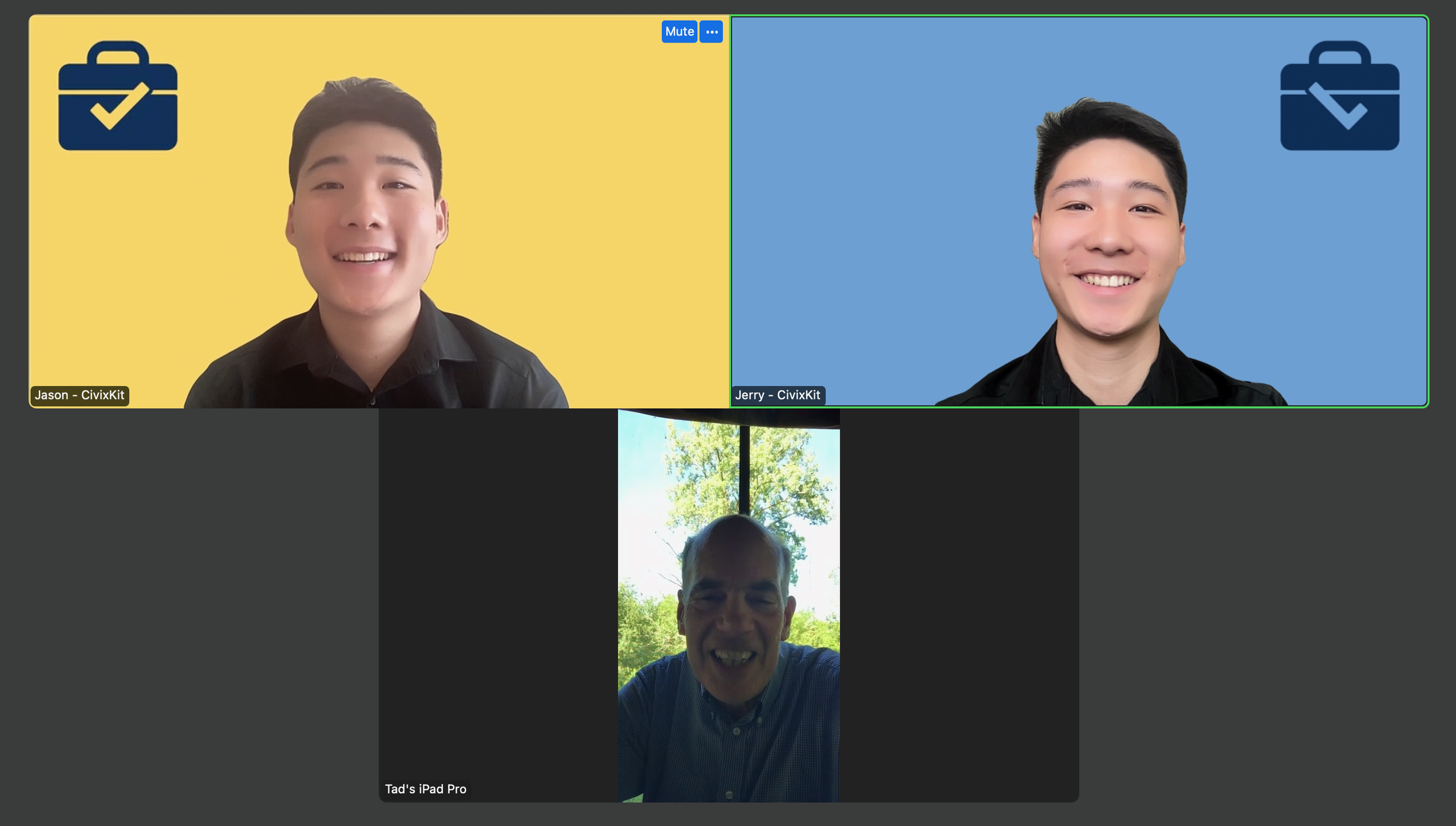
CivixKit in interview with Equal Justice Initiative (EJI).
With Mr. Tad Roach (Learning and Engagement Specialist).
Q: Many advocacy campaigns struggle to turn public support into real change. What has EJI found most effective in translating public sentiment into concrete policy impact?
“The most important word in Bryan Stevenson's lexicon is narratives … He always uses narratives to demonstrate the principles that are driving the Equal Justice Initiative. Narrative, narrative, narrative is Bryan Stevenson’s core insight. The narrative of what you are doing, why you are doing it, and how you counter the narratives blocking you is critically important.”
— Mr. Roach (Learning and Engagement Specialist)“To fight these narratives, you must identify the narratives that are preventing you from achieving your goals. These narratives might be simple. You have to construct narratives that correct the narratives blocking your goals and progress. After establishing this, there are two things you have to be really great at.”
— Mr. Roach (Learning and Engagement Specialist) “Bryan Stevenson argues that the most true evil of enslavement in America was a narrative. This narrative was used by white Americans to justify slavery. He argues that even after emancipation, the United States never rejected what he calls the narrative of racial difference. As a result, much of what we do on a day-to-day basis is [to] approach the criminal justice system and mass incarceration with the understanding that narratives within the system affect Black people more than white people in this country.”
— Mr. Roach (Learning and Engagement Specialist) “First is proximity ….. Honoring voices that have never been listened to before and ensuring that the voices you are discovering and uncovering are inclusive … specifically, people who may be marginalized, struggling, incarcerated, or dealing with mental health issues. Sometimes you will have to say things that make people uncomfortable.”
“The other thing … is the power of hope. Sometimes it can feel like you are not getting anywhere. Stevenson wants you to understand that hopelessness is the enemy of social reform and justice. You have to retain belief.”
— Mr. Roach (Learning and Engagement Specialist) Q: How does EJI design educational materials that are both widely accessible and resonant across age groups and demographics, while remaining deeply impactful?
Mr. Roach (Learning and Engagement Specialist)
“First, students and adults can sign up for the daily digital calendar, which is the narrative of racial difference on that particular day. It just allows them … to have a daily reminder of what was going on in the past and how that may be affecting what’s going on in the present.”
Mr. Roach (Learning and Engagement Specialist)
“The second thing is there are the scholarly reports that we put together on these major areas: the transatlantic slave trade, the domestic slave trade, racial terror lynching, segregation reports, and then criminal justice reform reports, and then videos accompanying many of those questions and issues.”
Mr. Roach (Learning and Engagement Specialist) + EJI’s Website
“Furthermore, our legacy sites.”
For context, these sites include the Legacy Museum, the National Memorial for Peace and Justice, and Freedom Monument Sculpture Park, which “invite visitors to reckon with our history of racial injustice in places where that history was lived”
Mr. Roach (Learning and Engagement Specialist)
“EJI also provides one-on-one contact with students from all across the world who want to have conversations, or want to talk about Bryan Stevenson, or writing a paper on the death penalty or about criminal justice reform. So we feel like that personal relationship and personal connection with an EJI staff member is really, really important so that it doesn’t just look like a website.”
“Don’t dilute your mission. The more specific and the more consistent you can be about your mission, the better off you’re going to be. The more you add to the mission, the more you will feel frustrated, as it can feel like it's getting out of your control.”
Q: Many grassroots campaigns want to engage in social justice advocacy but lack legal expertise. What advice would you give them, particularly students, on how to advocate responsibility and find guidance within these spaces?
“One of the things that I think a lot of students don’t realize when they’re going to a university is that there’s the student life and the student academic side, which is massive and important. And then there is this vast professional opportunity circling all around, which many students tend not to connect with on the university campus.”
— Mr. Roach (Learning and Engagement Specialist)
“The professors, the staff members, who are already working on advocacy, both locally but also nationally, are going to have a real interest in what you’ve already done … and what you want to continue to do.”
— Mr. Roach (Learning and Engagement Specialist)
“However, [students] are sometimes a little bit afraid or overwhelmed by them, but it’s so important to connect with adults and detail what you need. So definitely visit professors and tell them about what you’re doing, and tell them that you need some expertise and support to maintain the momentum.”
— Mr. Roach (Learning and Engagement Specialist)
Q: What do you see as the core elements that have made EJI’s public advocacy and communication so effective?
“I think there are two things that make the Equal Justice Initiative’s public communication really effective. One of them is that we are gifted with a transformational and inspirational leader. So for advocates, find opportunities to speak publicly, because that’s what public advocacy is.”
— Mr. Roach (Learning and Engagement Specialist)
“Number two is understanding the narrative … The narrative that Bryan is talking about is the narrative of racial terror lynching. So he built the first memorial in the history of the United States dedicated to this history. Not only did he create a memorial, but EJI was also the first organization to research racial terror lynchings to determine how many had actually occurred. So when Bryan Stevenson opened the National Memorial for Peace and Justice, there was significant national media coverage because it was something entirely new. He was also very effective at continuing to explain why the narrative and why the memorial itself were really important.”
— Mr. Roach (Learning and Engagement Specialist)
ToolKits
Educational Orientation
Description: A guided educational orientation developed by EJI to prepare visitors, students, collaborators, and organizations to learn and engage meaningfully with EJI’s mission and Legacy Sites. The walkthrough is split into four sections: (1) Mission, Work of the Equal Justice Initiative, (2) The Legacy Sites, (3) Bryan Stevenson, and (4) Public Education. Each section provides historical, legal, and narrative context, supported by facts and testimony, on the key issues EJI tackles, including mass incarceration, racial injustice, and the evolution of EJI’s work, through curated videos, readings, and interpretive framing.
Use Case: Best used when an issue, campaign, or organization contains multifaceted elements and is morally charged. Educational walkthroughs are most effective before site visits, classroom workshops, or campaigns, when participants need stronger historical and ethical contexts to ensure a more comprehensive understanding beyond surface level facts or headlines, especially for organizations as legally intricate and historically weighty as EJI and its Legacy Sites.
Takeaways: An educational orientation creates a more structured experience that aligns all participants around a clear, shared narrative, ensuring the campaign/mission is grounded in historically accurate understanding rather than disinformation. This primes learning, dialogue, and advocacy to be more likely to be informed by empathy and accuracy rather than mere reactive thinking or oversimplification, particularly when addressing societally perceived controversial issues.