

Environmental Defence is a leading Canadian environmental advocacy organization.
We work with government, industry and individuals to defend clean water, a safe climate and healthy communities. We envision a future where everyone in Canada can live and thrive in a healthy environment—protected for generations to come.
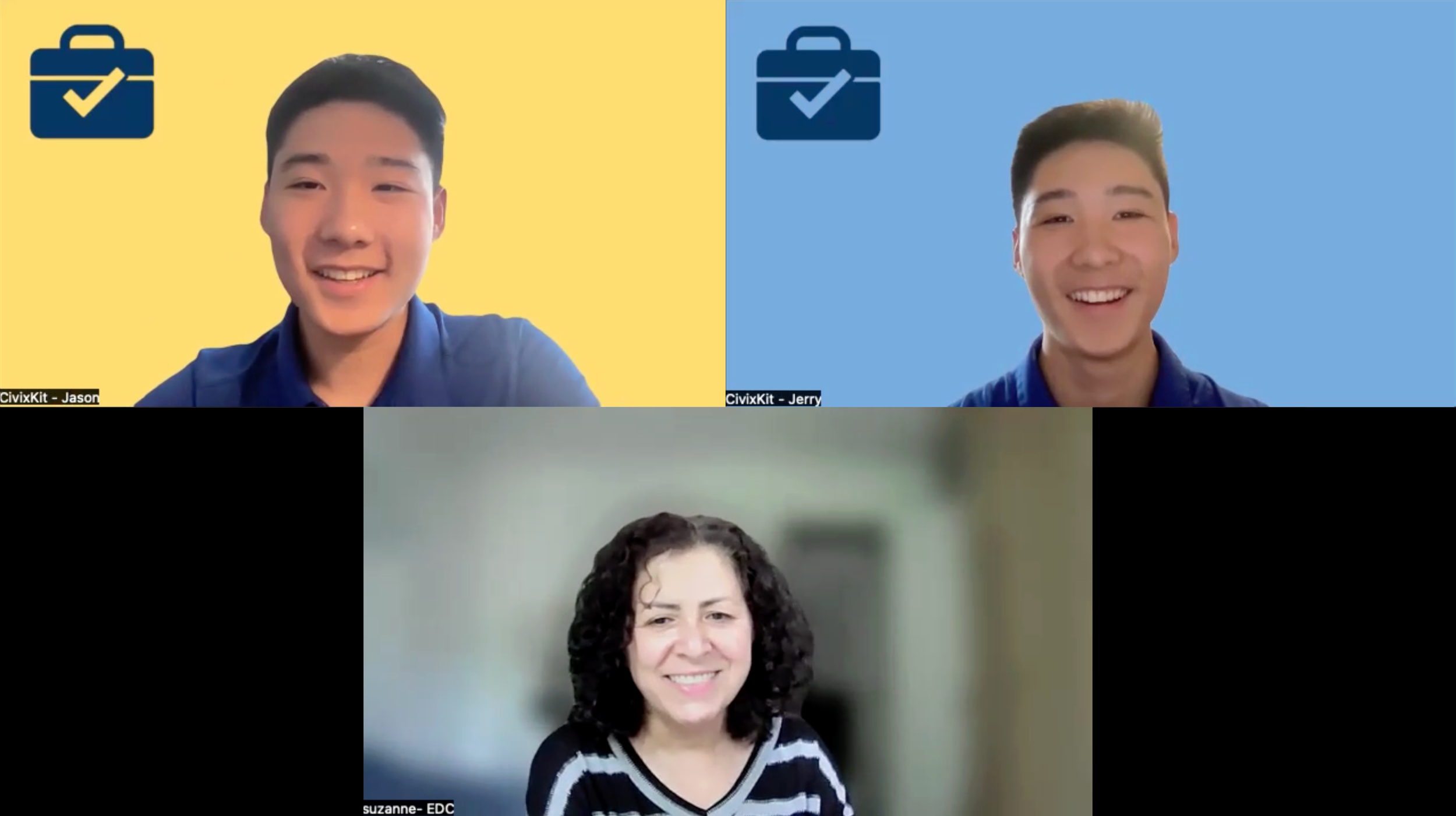
CivixKit in interview with Environmental Defence (EDC).
With Ms. Suzanne Apelian (Managing Director Specialist).
Q: Could you walk us through the anatomy of a successful Environmental Defence campaign, from its origins to execution, and explain what made it so effective?
“I’ll share the Hands Off The Green Belt, the Bill 66 campaign. [This] campaign was important because it made us pivot the way we work based on the needs. When the current [provincial] government won … and there was a threat to opening up the Green Belt for development, we realized as an organization, that the way we work right now with our three pillars in 1. public engagement 2. government relations, and 3. media to help us get the story out and ask the difficult questions of our sitting governments needed to change.”
— Ms. Apelian (Managing Director) “We realize that in a majority provincial government, that is not open to furthering environmental protections, but in reality, maybe promote the erosion of these regulations, with development being the most important variable for the government, we realize that we have to move to an underground fight. So, at the beginning [of the campaign], we put a lot of effort, and time, and resources into building and strengthening relationships with different underground groups, whether they're formed groups, volunteer groups, citizen groups, other NGOs, land use planners, all those people who are interested in how the Green Belt protects this province … and we became the support system for all the fights on the ground, not necessarily always the front of the fight or leading the fight.”
— Ms. Apelian (Managing Director) “For example, our fight against the Dresden dump, we would support the group on the ground that's fighting their local fight, and give them the support they need, from planning expertise, environmental assessment expertise, if they needed media training, a website to put their event on, help with the petition set up, versus going in and taking it over, because we're not part of that community. The community knows best. So, that big shift to on-the-ground organizing is how we have won on-the-ground battles against development, wanting to take over parts of the Green Belt, and changing the Planning Act.”
— Ms. Apelian (Managing Director) Q: From your experience, what is the most efficient way to approach potential partners and turn that into a long-term, effective collaboration?
Ms. Apelian (Managing Director)
“The first thing is that you have to have some reputation where people trust you, and they know that you're there, not because you have an agenda, but because you want to further the public good. Environmental Defence has been here 40 plus [years]. It has a reputation. Environmental Defence was formed to fight quarries in local communities. That's how a bunch of lawyers came together, formed the organization to lend legal assistance to people who are fighting quarries in Southern Ontario. So there is some reputation out there already that we work for the public good.”
Ms. Apelian (Managing Director)
Ms. Apelian (Managing Director)
Ms. Apelian (Managing Director)
“The second thing was to recognize that you need dedicated resources: building partnerships, maintaining them, fulfilling the needs of NGOs, volunteer groups, citizen groups, just random people in their communities who are very engaged. So we did hire for the role… people who are there to answer every email and pick up every phone call … and to decipher what it is that they need versus going in with an agenda.”
“We didn't go in with an agenda of, this is what you should, or this is where you go. It was more of what are you trying to accomplish? What are the gaps? Is there any strategic input necessary? We have a lawyer on staff … who meets with community groups all the time to give them the legal interpretation of certain bills and what is within your right and how you can fight it. So we made this expertise available.”
Ms. Apelian (Managing Director)
“We then centralized things that not every group can do, like petitioning, which we made available for everyone on our CRM. We have a webpage dedicated to all the knowledge around what's happening and all the events around the province at specific times. And you just send in everything that you want people to know. And we publish that versus every little organization having to have a website and maintaining [it]. And it's been ongoing. So the effort and the amount of time and resources has not diminished over time.”
“We [also] do these big workshops where we would invite people, and they would meet each other … and connect. So we would do it regional and they would basically exchange information and start meeting. We tapped into other organizations that do this already, maybe smaller, maybe more regional, and they started being the voice for smaller citizen groups or volunteer groups in their region.”
Q: What framing strategies best translate complex, legally or scientifically technical policies, such as Bill C-5, into public narratives that motivate action?
-
"This often is a point of contention. All of our campaign teams, program teams, and have representation from all the competencies in the organization. So let's say people working on climate policy or climate finance policy. On the team, there will be the subject matter expert, who's the campaigner, who understands how to read the regulation, how to interpret it."
— Ms. Apelian (Managing Director)
-
"Then there are the engagement team members, who take that information. We make it accessible to our supporter list because our role is to communicate with our supporter base. Our supporters have been following us for a long time. So our emails are content-heavy, but they're not jargony. Instead of using the legal words, we tend to use the explanation."
— Ms. Apelian (Managing Director)
-
"When we send the email, we prioritize the two things that I need you to remember from this email. We don't need you to remember everything because you're not the policymaker, you're not the lawyer. But if you were to tell a neighbour, a friend, a family member, what would you say about that issue?"
— Ms. Apelian (Managing Director)
-
"We also have a very strong comms support, and every team has a comms person … and it's the comms person's role to pay attention to what's resonating in the public and how we should pivot when we talk about certain things. So they do a lot of testing, what message is resonating? Which one are people actually understanding what it means? And then we follow, sometimes we also do our own polling about the saliency of specific subjects."
— Ms. Apelian (Managing Director)
-
"Climate finance is not a very easy topic. It is an inside thing. It's not going to be a big public campaign because how many people are really going to read about what the Climate Alliance Finance Act? Very difficult ... so we know that in that case, that campaign needs to be more with investors, Bay Street, banks, and government, that should be the priority audience. Then we bring in our supporters who are interested in the topic. Whereas Bill C-5, there are things in those that are very interesting to the Canadian public because they touch on our values when we say “nation building.” Canadians associate that with something. So those are more campaigns where the saliency with the public is higher."
— Ms. Apelian (Managing Director)
-
"So we pivoted our public communications to start with values-based first. What are the values that we care about as people who live here? Why did we come here? We start there, but we always move into the policy and the regulation, because ultimately we are a policy shop and we do believe that the Canadian public has the appetite and the ability to understand policy. To ensure our message resonates, we also do a lot of testing, and then we pick up what phrases are resonating and then we tie it [back] to our policy."
— Ms. Apelian (Managing Director)
Q: In your experience, what has been most effective in changing public opinion or pressuring decision makers?
Public opinion shifts with other variables. Five years ago, I would have said Canadians want climate action, they want an ambitious government, and the previous federal government was very close to passing really game-changing policies … but then the world changes, and you now have an immediate threat to your country, whether it is economic or even physical. That is where the industry, the polluting industry lobby basically are able to come in and usurp some of the freedom conversations or, you know, the economic best interest of Canadians. So the public shifts with that because fear is very difficult to overcome.
Ms. Apelian (Managing Director)
Now, the climate is not top of mind. Right now affordability is top of mind. To make the connection between affordability and climate change is many sentences over. It's not one sentence. So that's why it is a bit tougher.
Ms. Apelian (Managing Director)
As to influencing decision makers, it used to be petitions. And if you had a certain number of petitions, you would get a response, whether it's a councillor, whether a provincial official, whether federal, they would pay attention to what you're saying or what their supporters, constituents are saying. But more and more now, we're moving to on the ground because there is so much noise. You can't read social media now and know are you're reading a fact or fiction? There's no way to validate it. This information is everywhere.
Ms. Apelian (Managing Director)
So, people calling their elected officials, people going to constituency offices have been the better levers for us to gain momentum in pushing some things forward, because ultimately we are a four-year cycle in any election, and people want their seats back. So we've been pivoting to more of that kind of much deeper mobilization.
Ms. Apelian (Managing Director)
For Canadians, what resonates is when they see it, when they feel it, when it is in their backyard. That resonates. There is always a group of people who can see the entire picture and care about how climate change is impacting communities five countries over. But for the majority of people, because of day-to-day responsibilities, the issue becomes real when they start feeling something. That is why proximity to the issue matters. We did the same with the Energy East pipeline… instead of talking about emissions, we showed all the waterways the pipeline would cut through, what it would destroy, and the species that would be affected. When people could see it, that is what mobilized them.
Ms. Apelian (Managing Director)
Q: There’s a common debate in climate advocacy about fear-based versus hope-driven messaging. In your experience, which is more effective, or is it about balancing the two?
“You need to understand your audience and message accordingly. So, we always see what the trends are, what the posts are saying. But at the end of the day, we always test. We do one negative or more immediate ask, then we do one more hopeful. And based on the different audiences that we're trying to attract to an issue, we decide which one works better.”
— Ms. Apelian (Managing Director)“There's no one right, one wrong. And organizations are known for being different. We're known more for the more straightforward messaging. It’s not better or worse, but for our audience, it’s just what resonates more.”
— Ms. Apelian (Managing Director)“When we try to expand to other audiences because of a need, geographic, demographic, socioeconomic, whatever that may be, we test. If it's a new campaign, we ask how do you talk about this [so] that people resonate, so that they see themselves in this messaging. So, test, test, test.”
— Ms. Apelian (Managing Director)Q: What is one trait that is most important for all advocates and campaigners?
“I say you need to understand policy in depth. Now you don't have to be the person who writes the policy. But I always advocate for knowledge … more in-depth, not shallow. Because we can say, you know, climate action is good. Climate change is bad. But then you need to be able to answer the second question. And then the third question.”
"There are so much misinformation out there. The more you know, the better … and the more you're able to make your case. Because lies spread faster. Don't fall into the pit of slogans or phrases that resonate. At the end of the day … you need to understand what you're talking about.”
— Ms. Apelian (Managing Director)ToolKits
Campaign Analysis
Description: A campaign breakdown of both the timeline of events and the specific strategies, such as investigative journalism and public mobilization, that led to Environmental Defence Canada’s successful reversal of the Ontario government’s decision to open protected Greenbelt lands for development.
Use Case: Best suited for scenarios of large-scale environmental or civic campaigns attempting to lobby/fight against environmentally harmful government policies.
Takeaway: This case highlights that change is rarely driven and confined to a single tactic or one organization. Rather, tactics such as coordinated mass mobilization, petitioning, investigative journalism, and coalition organizing can overpower even a majority government and force policy reversal. Thus, it is important to not only amplify credible evidence, but also strategically leverage public narratives, outrage, and sentiment.
Activation Tactics
Other Embedded Phenomenal Resources Recommended by EDC
Protest Rights Infographic: please review your rights before organizing or participating in any protest or demonstration.
Credit: Canadian Civil Liberties Association
Description: An organizing guide that explains how to influence decision makers. It outlines what constitutes a decision maker, how to identify + contact local MPs, MPPs, mayors, councillors, and provides step by step guidance on activation strategies: writing letters, submitting letters to the editor, making phone calls, setting up meetings, organizing petitions.
Use Case:Useful for campaigns in the early or/and mid stages seeking to translate public concern into direct political pressure on decision-makers.
Takeaway: This toolkit shows that effective advocacy does not often begin with huge organizations or massive scale, but with consistent, personalized engagement that is accessible to everyone! Targeted communication and direct contact with decision makers can directly decrease the threshold to influence and make public pressure impossible to ignore. *Importantly, there is a difference between simply taking action and taking action effectively. Following the outlined suggested questions and structure can maximize impact.
Event Planning
Description: A two part event planning guide that covers both how to plan an event and how to run it on the day. It walks organizers through every key decision, including choosing a location, date and time (weekdays vs weekends), naming the event, assigning roles, coordinating media, volunteers, and permits, and managing what happens before, during, and after the event.
Use Case:Used for planning and running small to medium sized in-person environmental events, such as rallies, marches, or demonstrations aimed at raising visibility, attracting media attention, and mobilizing supporters around a specific environmental issue or bill/decision point.
Takeaway: Effective events are won or lost in the planning stage. The guide emphasizes that there are countless strategic decisions that shape a climate event’s success, from maximizing the visibility and accessibility of the location, to figuring out when local media are most likely to report, to assigning specific roles such as marshals or a police liaison, all of which can significantly exacerbate impact. Many of these pathways are not costly, and EDC has also thoughtfully included a wide range of embedded resources, examples, and links to support organizers, such as know your rights guides for protesting, examples of strong event names, where to access free batteries, websites to generate QR codes, and how to conduct land acknowledgements to create a structured and impactful day of action.
TLDR: This resource is a goldmine and an essential playbook for environmental events.
Press Release Example: Ideally sent to local journalists and local radio or TV news desks one week before the event.
Credit: Citizens for Public Justice (CPJ)
Digital Organizing
Description: A step by step organizing primer that outlines the core infrastructure needed to organize digitally. It includes: 1. Setting up a website (domains and templates), 2. How to choose the right social media platform (pros and cons of each social media platform from Facebook, Instagram, X, and Bluesky), 3. How to manage internal communications (Google Groups and Slacks), 4. Running petitions (Change.org, Action Network, Leadnow). Throughout, it emphasizes how to select the right tools based on your campaign’s goals, scale, and target audience.
Use Case: Best suited for early stage or volunteer led campaigns targeting any social cause that needs to rapidly build an online presence, engage and communicate with supporter bases, and turn public interest into concrete actions such as petitions, events, or direct pressure on decision makers.
Takeaway: Effective organizing is built on digital media. It is critical to weigh the pros and cons of each platform and recognize that what works for one campaign may not work for another. Thus, clear, direct, and visually appealing websites, communication channels, and digital platforms must be chosen intentionally. Campaigns must also understand their goals and mold their digital organizing around them to sustain engagement and pressure over time rather than relying on a single moment of attention.