
At the heart of everything we do is Youth Power.
Restless Development is a non-profit, locally led, globally connected network that supports the collective power of young leaders to create a better world.
More than ever the world needs young people’s power and leadership to solve its greatest challenges. Every year we train, mentor, nurture and connect thousands of young people to use their youth power and lead change.
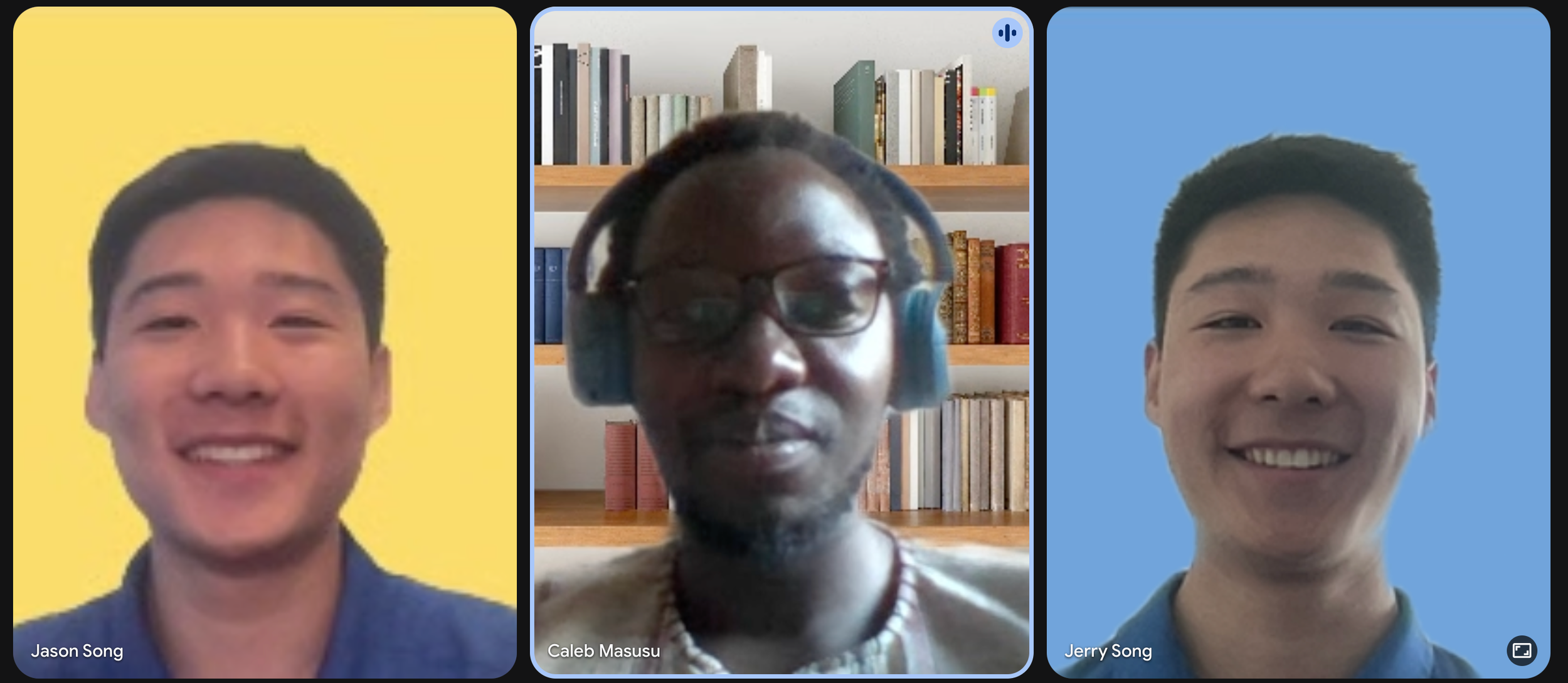
CivixKit in interview with Restless Development.
With Mr. Caleb Masusu (Global Voice and Democracy Manager).
Keep on, never give up. I think challenges are gonna be there. You are not here by mistake, so don't be afraid to get into spaces and speak boldly and loudly about the issues that you care about, because they do affect you. The future is not tomorrow; the future is today. Because only today is guaranteed.
Mr. Masusu (Global Voice and Democracy Manager)
Q: What’s one example of a successful Restless Development campaign, and what made it so effective?
“I’ll discuss the Missing Majority Campaign, which was presented at COP23. A growing frustration among young people and among youth activists and advocates from different issues in their country is that, although leaders are meeting every year to make decisions about our global futures, there are countless barriers to accessing such kinds of spaces for young people and to have their voices heard. So the Missing Majority movement is raising awareness about how inaccessible the space is.”
— Mr. Masusu (Global Voice and Democracy Manager)
“We collected testimony. The quotes came from when … we simply asked them the question: What do you want to see the space to be like this year? There were countless quotes from young people saying, COP should be like this, COP should be like this. I envision a space that is like this.”
— Mr. Masusu (Global Voice and Democracy Manager)
“The anatomy is similar to most of the work that we do. It's youth-driven, and it's youth conceptualized. We do lots of consultations with young people … a lot of drafts … feedback sent back and forth. Also pushing this work through the networks of young people as well, sharing hashtags with them. This particular campaign featured a lot of views and quotes from the so-called missing majority: the affected young people.”
— Mr. Masusu (Global Voice and Democracy Manager)
“In the end, they were not seeing the ways of Restless Development; they were simply seeing the ways of young people from there. So centring young people at the core was really the main backbone of that campaign. And we were just facilitating and supporting young people to drive it.”
— Mr. Masusu (Global Voice and Democracy Manager)
Q: How does Restless Development help young people turn everyday problems in their communities into meaningful action?
“For example, when you talk about Voice in Democracy, we don't only see it as elections. Elections are important, yes, but the participation of young people in the democratic process, trying to achieve the best outcome for themselves in their community, is equally important.”
Mr. Masusu (Global Voice and Democracy Manager)
“So for example, if there's poor service delivery at a clinic in Zambia, at Katondo … in the approach of our Voice in Democracy work is supporting young people with the skills to be able to document that challenge and supporting them to identify who has the power to respond or solve or help them find a solution through a process we call Youth Related Research.”
“We'll support them to identify the decision makers responsible for the issues they face, for example, it's the Minister of Health. So then they will be able to convene or approach the Minister with that information that they have on that challenge and say … this is a challenge we have in the community and this is how we feel. If it can be resolved … this is how we can support to ensure that it's resolved. Or if it can't be resolved now, what can be done in the meantime? So it's not the sensational expectation of the voice in democracy work is confrontation, but I think we see that there's a lot of value in coming to the table and discussing.”
Mr. Masusu (Global Voice and Democracy Manager)
Mr. Masusu (Global Voice and Democracy Manager)
Mr. Masusu (Global Voice and Democracy Manager)
“The culture that we build in the young people that we work with is: this is your world, this is your community, this is your life, you have the power to take steps. And this is how you can take steps to ensure that change happens. It seems like a lot of work, but if you are looking at it from an angle of voice and democracy, it's about supporting young people to have the skills, the knowledge and the confidence to do something about the problem.”
Q: What are the most important skills and qualities youth advocates need to succeed in advocacy work?
“Research. It is so simplified that when you say research, people are thinking of traditional research, academic research, but sometimes it's co-produced, like the sort of on-ground example I gave about a clinic, for example. It's young people coming together and implementing a study at the clinic, asking other young people to tick a smiley face on how they feel about a certain service, right? If 10 young people have ticked on a frowned face, it means there's something wrong with the service, and something needs to be changed. And afterwards, there are basic question: what do you think should be done if you're not happy? And young people are able to put that together and say, we have this paper which says young people have told us it's not working here, and we need to change.”
— Mr. Masusu (Global Voice and Democracy Manager)
“Moreover, I think we've seen that young people benefit a lot from networking with one another and learning about opportunities and learning about the work that other young people are doing, which inspires them to take action on their own issues as well. So to help this, there is the youth collective, which is our big connection for young people to connect and learn from one another.”
Campaign Pledge
Campaign Funding
Description: A youth-led research report examining the different funding mechanisms that enable youth civil society to flourish (trust-based, unrestricted, re-granting, and philanthropic funding models), assessing which are most effective, and proposing 10 principles to shift power, improve accessibility, and more equitably resource youth-led initiatives.
Use Case: This resource is best utilized by a host of different stakeholders: funders, donors, policymakers, and most importantly youth-led organizations seeking evidence-based insights to design sustainable and long term funding models.
Takeaway:
In short, the 10 #FundYouthPower principles. Youth centered movements thrive when funding shifts power from large bureaucratic systems to young people through trust-based, unrestricted, and participatory funding models. Access to funding should be simplified, investments should go beyond mere finances, and accountability & impact metrics should be co-designed with youth themselves.
Stakeholder Engagement
ToolKit
Campaign Declaration
Campaign Capacity-Building Toolkit
Description: A digital rights pledge that demands a safe, inclusive and rights respecting digital spaces, with key commitments to privacy, safety, accountability, digital literacy education, and equal youth participation.
Use Case:A strong example that can be emulated for pledges or public announcements that enunciate an organization stance/values while attempting to accumulate signatures.
Takeaway:
1. Structure is important. Start off with a background of status quo and the problem at hand, clearly identify the issue the pledge addresses, then briefly (beneficial with bullet points or indent dashes) to outline the key commitments the organization pledges. It is also helpful to use a clear, concise, and memorable name for the pledge.
2. Pledges are powerful. They set norms, unify diverse actors, legitimize campaigns, and establish shared standards that anchor future policy and advocacy work.
Description: This is an amazing modular set of youth leadership training resources designed to support young leaders in understanding their roles, facilitating meaningful dialogue, developing inclusive leadership skills, challenging structural inequalities, and holding decision makers accountable.
Introduction Module: An introductory overview explaining how this set of resources was developed, what it aims to accomplish, and how to apply/implement its lessons.
First Module: Helping young leaders introspectively reflect on their lived experiences, understand different forms of power, and help them develop to use their powers to become better leaders.
Second Module: This module is focused on leadership styles, conflict management, and expanding past the self to apply youth power in leading others within organizations, networks, and broader movements.
Third Module: This module expands on the previous one and focuses on boosting youth engagement, developing key skills such as inclusion and diversity, and avoiding tokenistic participation.
Fourth/Last Module: This module focuses on accountability by shifting power to hold both leaders and ourselves accountable through evidence, coalition building, and ecosystem mapping.
Use Case: Best used by youth organizations, movements, or individuals running leadership training workshops for young people. The toolkit itself outlines that it works best for “groups of 15-30 in an in-person setting.”
Takeaway: The most effective and sustained youth leadership & movement development is an intricate, intentional, multi-step process. It requires prerequisites such as safe and participatory learning spaces where young people can share openly, paired with deliberately crafted exercises to move from personal reflection and power awareness into collective leadership and accountability.
Description: This playbook from SheDecides is grounded in feminist movements and provides tangible advice and direct worksheets, supporting advocates to better organize for bodily autonomy and sexual rights. It structures the playbook into five key tenets of mobilization: telling stories, building relationships, structuring teams, developing strategies, and taking action.
Use Case: This resource is well suited for campaigns working on gender justice, bodily autonomy, SDG 5, and sexual and reproductive health. Given its depth and analytical scope, it is valuable both for well-established campaigns and for those that are just beginning.
Takeaway:
Any change that is long lasting comes from organizing people, not issues. This resource emphasizes leadership development over mobilization alone, as with better leadership development, mobilization will inevitably follow. Relationships are the foundation of power.
Donor Dialogue ToolKits
Description: This book details how to design and implement youth-led accountability initiatives. Specifically, it proposes a tested “model for change” piloted in programs in Uganda and Madagascar. It dives into the six key components of an effective accountability campaign: leadership, transparency, community, feedback, building trust, and support.
Use Case: Intended to be used by youth-led organizations and organizations working directly with young people that are designing or implementing accountability initiatives.
Takeaway: This resource shows that many projects often fail not due to bad intentions, but because accountability mechanisms are weak or simply symbolic. It also reframes leadership not as a title, but rather as a journey. While youth already possess leadership through lived experience, they need structured support and constant reflection to translate that into real impact.
Description: A declaration to reaffirm commitment to strengthen democracy at the Democracy Moves 2023 Annual Conference through youth leadership, civic education, gender equity, etc. For a bit of context: “Democracy Moves is a growing global network of young leaders who fight for democracy, human rights, and social justice in their home countries, primarily Africa, Asia, Latin America, and the MENA region.” - Restless Development
Use Case: This resource is structurally similar to the previous resource on the left, but tends to work more effectively in the contexts of conferences and large conventions.
Takeaway: The key difference between a pledge and a declaration is that a pledge commits to X action, while a declaration is more often an amalgamation of groups that collectively stand for X or X values. Declarations help align diverse movements around common priorities and coordinate action, even when groups pursue fundamentally different goals.
Youth Training Toolkits
Description: A step by step guide that breaks down how to create meaningful dialogue between donors and youth CSOs to improve how youth initiatives are funded, supported, covering everything from how to engage donors and structure events to promotion and post dialogue follow-ups.
Use Case: Best used by youth organizations, governments, NGOs, international organizations, and intermediaries seeking to convene donors and youth CSOs to address funding challenges,
“strengthen collaboration,” and co-create practical solutions for “a better, more sustained funded youth civil society sector.”
Takeaway:
There is no one size fits all solution. However, donor dialogues work best when they are well-research and issue specific, bring together the right participants to exchange and share insights, use a dialogue format that is most conducive to the goal (from workshops to Twitter chats), and are intentionally promoted with follow ups with participants after the event to sustain momentum. (1) dialogues should have clear objectives, (2) discussions should be inclusive, and (3) discussions should be ongoing.
Campaign Oversight
Below are cut-and-paste examples for each step: email invitations to donors, key questions and talking points for donor conversations, and social media promotions for the dialogue event itself.
Strategic Framework
Email Invitation
Key Messaging
Socials Promotion
Description: It is a long-term global strategy that lays out Restless Development’s vision for youth-led change. It defines their key priority impact areas in education & livelihoods, gender & sexual rights, voice & democracy, and climate justice, alongside core principles guided by their unique power-shifting checklist: (1) prioritise youth leadership, (2) prioritise safety and happiness, (3) train, support, and resource young leaders, (4) be open, dynamic, and accountable, (5) intentionally shift power, and (6) be restless: flex, innovate, and create.
Use Case: This resource is highly specific to Restless Development and other youth centered organizations, but its format (key values, priorities, guiding principles, etc) can be emulated by youth organizations, any campaign, or institutions, especially those with multiple departments or internal working groups seeking alignment around a shared theory of change. The process of creating such resource itself is also valuable for strategy setting, sharing and prioritizing the work of internal teams, and crafting partnership design.
Takeaway: To craft an effective shared strategy, use simple visuals (often drawing on the colours, shapes, and icons of the organization’s brand/website) to clearly communicate key components: impact areas, principles, and different subbranches, etc. This approach not only provides long term goal setting, enables tangible process tracking, but also helps reduce fragmentation, inefficiency, and mission dilution, especially as the movement scales.
Description: This is a global report that examines how youth-led movements and organizations are reshaping civic spaces and creating impact in the current context of financial restrictions and political turmoil. It coalesces case studies of what made them successful, lived experiences, and practical frameworks to show how young people build movements. This report touches on movement building, community philanthropy, impact investment, impact measurement, and funding adjustments.
Use Case: Best used by youth organizers RIGHT NOW to understand the global trends shaping a shrinking youth civil society, especially shrinking funding, political pressure, and lack of recognition. It draws lessons for building and funding youth-led movements across diverse political and economic contexts. This toolkit is especially valuable both before (how to organize, fund, and govern) or alongside a campaign (success/impact measurements).
Takeaway: Takeaways: Youth-led movements can still thrive without following the conventional structure of a formal “organization.” They can be informal, office-less, and unregistered, but as long as there is a clear “why” and collective ownership, they can be immensely successful. Moreover, funding is both incredibly important and dangerous: early resourcing from big donors can easily distort priorities and weaken autonomy. Anything is possible; please don’t let the current constrained socio-political conditions stunt your progress.