

Vote16 is a large national network of groups who believe it’s time to extend voting rights to 16 and 17 year olds in Canada.
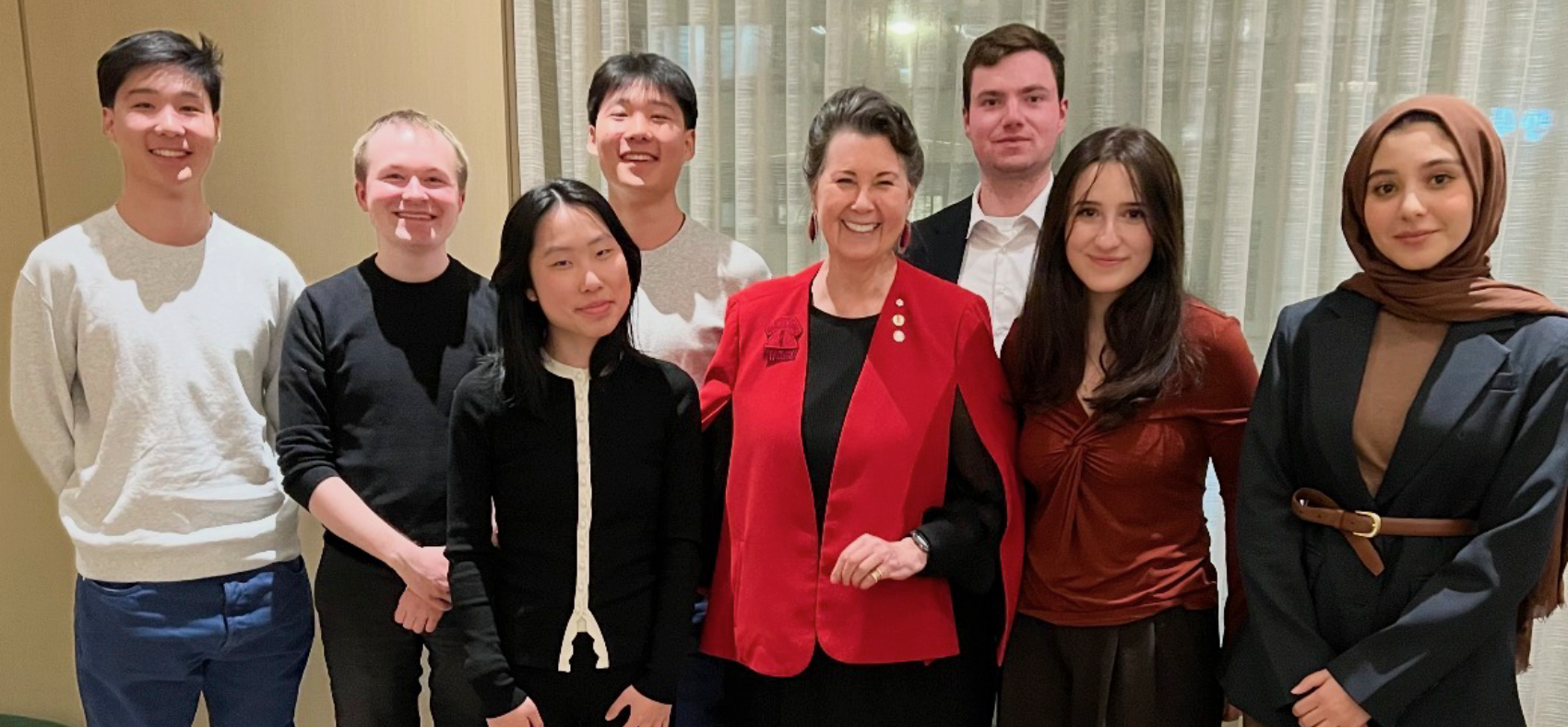
CivixKit with Vote16 Team and Senator McPhedran
Q: How do you manage a campaign that is highly controversial, and how do you navigate the pushback that comes with it?
“As you can probably guess, Vote16 is not like fighting for environmental change or better education, where the average person already believes the cause is beneficial. If you look at any of our comment sections or campaigns with us, you’ll see there is a significant amount of backlash.”
— Vote16 Canada Team
“So while it can be frustrating to see so much negativity, it’s important to recognize that people are simply voicing their opinions, just as we are voicing ours in support of lowering the voting age. The best approach I’ve found is to engage with them through respectful conversation. Oftentimes, their views come from what they’ve been exposed to and grown up believing. They may have never encountered strong evidence or arguments for lowering the voting age, so it’s important to hear their perspective as well.”
— Vote16 Canada Team
“What I’ve found to be most effective here is solid evidence. Drawing on real-world examples, like Scotland, Austria, and Tacoma Park, has been especially impactful.”
— Vote16 Canada Team
Q: For someone starting their first advocacy campaign, how should they approach building strong and effective coalitions from the ground up, and what are the key steps to forming partnerships that actually last?
“One is simple: the more, the merrier. Here, I would really tell them to try to think outside of what you traditionally think your partners could be. So taking Vote16, you normally think it is only youth and civics, right? While those are easy to think about, like youth empowerment groups, student boards, and teacher unions, you should really show that your issue is not just confined. Show that it is expansive, that it has reach and overwhelming support from the general public. So labour unions, Indigenous groups, they can be huge advocates. But obviously, starting off, it might be much easier to begin with groups that have similar alignment.”
— Vote16 Canada Team
“Second, I would say reach out internationally. I promise there are similar movements across the world, so please, please do reach out. For example, Vote16 does not only happen in Canada, there is Vote16 USA, Vote16 Ireland. Reach out, share resources, you are all fighting for the same goal.”
— Vote16 Canada Team
“Lastly, I would say really show that you are genuine. Make sure you are not phrasing it like, “we need this, so please collaborate and give us your resources and support.” Make sure to do your research, really show you care, clarify why you are reaching out, and emphasize what you can do to reciprocate. Ask them to promote your social media, and you do the same. Make sure it is a win-win situation.”
— Vote16 Canada Team
Q: How are you advertising and engaging youth, and what strategies have been most effective in getting them involved in the movement?
“As you know, your target audience is youth specifically, so really focusing on those platforms like Instagram. We also have a Discord group where we plan everything. In fact, we originally started on Slack but quickly realized it was way too inconvenient, so we quickly switched.”
— Vote16 Canada Team“Another aspect is trying to engage more youth through youth encouraging youth, right? It’s significantly more convincing if your friend is encouraging you to join instead of an Instagram ad.”
— Vote16 Canada Team“So on social media, we run campaigns to try to get them engaged, like 16 Days of Vote16, mini skits, or debunking myths. At the end of each of these posts, where hopefully we’ve got their attention, we attach links to our website or news articles so people can learn a bit more and find ways to join. That’s important. If you only focus on getting widespread attention, you need to make it easy for people to actually join.”
— Vote16 Canada Team“Lastly, a lot of it is through Senators or MPs speaking at schools or events, sparking conversations about it. As mentioned before, people often don’t even know about Vote16, so starting those conversations is a great gateway.”
— Vote16 Canada TeamHow do you balance your resources and attention across regional, provincial, and federal campaigns, especially when you have multiple initiatives running in different provinces at the same time?
Q: If someone were starting a youth-focused advocacy campaign today, what are the three most important pieces of advice you would give them?
1. Establish strong infrastructure early.
Build your team structure, set up custom emails, and create a website before scaling. Having a solid foundation makes everything else much easier to grow.
2. Listen to Youth.
Don’t try to impose what you think onto their lived experiences. Everyone is different, and that’s the strength of it. People bring their own perspectives, and your campaign should reflect that.
3. Focus on action, not just awareness.
Awareness is great and often the first step, but it cannot be the end goal. If you only focus on spreading awareness, you miss the point. You need to convert that awareness into real action.”
News Media Outreach Exemplar
Description: This is the Vote16 provincial campaign’s backend media contact list. It provides a structured and replicable format to maximize media attention and spread awareness of NGO and movement work, organizing names, contact information, roles, areas of expertise, and strategic notes to enable advocates to target outreach with precision and relevance.
Use Case: Advocacy teams engaging in media outreach and public narrative building, especially on polarizing issues, to identify journalists and outlets likely to provide neutral or supportive coverage. Most effective during moments of amplification, such as launches, policy pushes, or key milestones. It is also valuable as a long-term tool for building targeted media lists for future campaigns.
Takeaways:
Media engagement is not about volume, but precision. Journalists receive hundreds of pitches daily, so success depends on aligning your story with reporters who already cover your issue area. This is why backend organization matters: systematically mapping journalists by beat, past coverage, and expertise allows advocates to move from generic outreach to strategic placement.
Equally important is evaluating outlets beyond size or reputation. What matters is not just reach, but alignment, how the outlet has historically framed similar issues, the tone of its coverage, and whether it is likely to engage seriously with your narrative. It is actually more important to ensure coverage that benefits the campaign rather than bad press from a national newspaper for instance.
Effective campaigns also diversify their media strategy. This means examining local, provincial, and national newspapers, as well as radio outlets and podcasts, each reaching different demographics and offering distinct tones and entry points for amplification.
Public Speaking at Council Resource
Description: A guide that explains how individuals can effectively speak at city council meetings. It outlines the specific processes, what to expect, and then how to prepare. It covers the long logistics such as how to sign up to speech, the very specific protocols.
Use Case: Best used when considering engagement with municipal council, first to assess whether speaking is the appropriate and necessary course of action, and then to guide preparation for delivering a clear and effective message.
Takeaways:
Using correct terminology and following expected protocol not only demonstrates respect but is essential for building credibility, especially for younger speakers.
Speaking time is limited, therefore understanding how to balance clarity, structure, and concision is critical to ensuring your key message is effectively communicated.
You are not required to answer councillor questions and can redirect or decline if needed.
Media Engagement Guide
Description: This is a strategic guide on working with the media, focused on crafting effective press releases and navigating interviews. It explains how to engage journalists to gain media attention, and how to communicate key messages clearly, strategically, and persuasively to maximize impact.
Use Case: Best used when trying to reach out to various media outlets, then preparing to engage effectively once interest is secured. Best used especially for first time media interviews, to help handle interviews with confidence and control.
Takeaways:
Always define and reinforce 2–3 key messages, regardless of the questions asked, to ensure your narrative comes through clearly and consistently.
Linking your outreach to current events significantly increases the chances of media attention and coverage.
Keep responses clear and simple. A good way is to set boundaries on what you will and will not say during media interactions.