
Partners In Health (PIH) is a global health and social justice organization that responds to the moral imperative to provide high-quality health care globally to those who need it most.
We strive to ease suffering by placing patients at the center of all care, meeting not only their physical, but also their mental, emotional, and daily needs so that they can recover from illness and maintain good health.
We bring the benefits of modern medicine to those who have suffered from the overt and subtle injustices of the world, in the past and in the present.
We refuse to accept that any life is worth less than another.
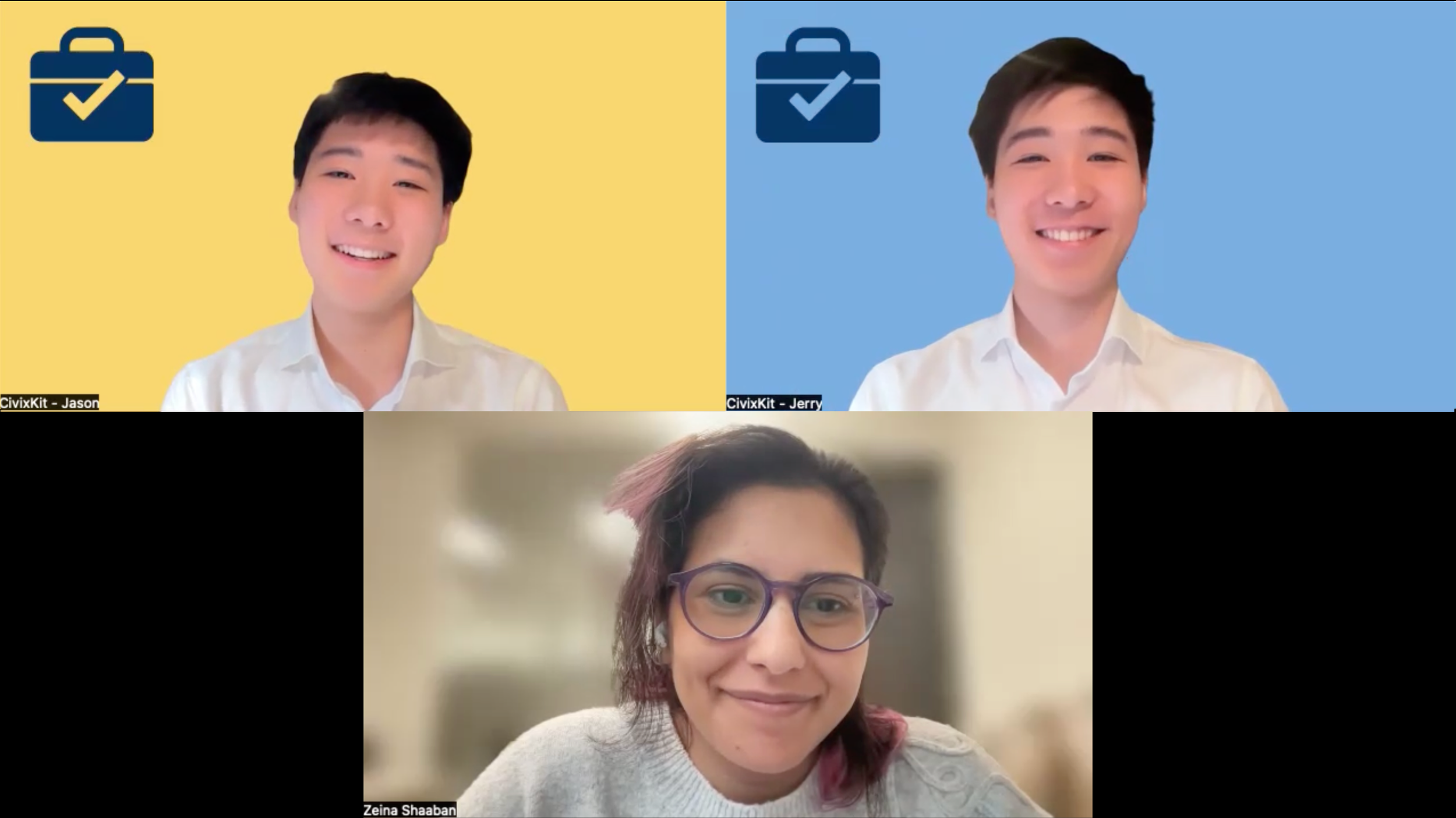
CivixKit in interview with PIH Partners In Health. With Ms. Zeina Shaaban (Manager, Digital Communication & Grassroots Strategy). The following testimony/advice are provided by Ms. Shaaban.
Q: Can you walk us through the anatomy of a successful campaign, from idea to execution, and what you think ultimately made it so effective?
“I can touch on Nourimamba, which is the fortified peanut a treatment that is given for people with malnutrition or primarily children with malnutrition in Haiti and that is a fantastic example of looking at a project that really responds to the needs in the moment and that takes into consideration the listens to the people and what they are saying and the realities that they're living in.”
“It’s almost condescending, assuming I don’t know that I need to eat those things. There’s this assumption that the issue is always educational and that nothing else is at play. Going deeper and building a relationship with our patients, we call that accompaniment. We ensure there is a long-term, meaningful relationship with a community health worker who even visits patients at home. If someone misses an appointment, they check on them to understand what’s happening.”
“You know, we understand that we need to eat. We understand our children are malnourished, but we don’t have food to give them, and it’s not safe to go outside. So it’s a very sensitive solution where we partner with local Haitian farmers. They are able to produce it as a paste that isn’t difficult to make, and there is a system to predict production and distribution. Through collaboration between community health workers, clinics, and hospitals, which are not all operational at the moment because of the violence, you’re still able to get that food where it needs to go.”
“So many interventions that we hear about just talk about “oh lets just do prevention or just do education”, let's do a leaflet about why nutrition is important for example, and we've had that suggested in other countries. But some of the diseases like tuberculosis, for example, it's very opportunistic and it makes you emaciated it makes you very sick, very weak, very thin and huge proportion of the people who are getting it are poor people they're in poverty and so they don't necessarily have access to meals and to high quality nutrition and so when you are telling someone go and get like here's a brochure on the pyramid of nutritional value, telling you to make sure “to eat your greens today” and it's like, well, you know, I had to choose between going to my job and getting paid for the day or coming to the clinic for this.”
“Through this process, and given the context of Haiti, we were able to understand that there is significant gang violence. Many ports and imports are affected because they are under gang control, making supply chains unreliable. This means that even if we wanted to produce something and bring it in, it wouldn’t be possible. Understanding all of this, and listening to what people were saying, helped us see the situation more clearly.”
Q: Partners In Health operates in 11 countries, with over 18,000 staff members, most of whom are locally hired. How do you organize and coordinate such a large team while maintaining a consistent mission and quality of care across these different regions?
“I think it is very important to recognize the interdependence of the different organizations. We are 12 or 13 different organizations working within one ecosystem toward a common goal. There is a level of independence and autonomy, which is important because otherwise it becomes global North countries deciding priorities and distributing what needs to happen.”
“It should be about everyone coming together, sharing their priorities, talking through points of contention or disagreement, and arriving at a unified vision and strategy for the larger PIH system. I think that is a key part of it.”
“Whereas If we want a bottom-up, grassroots approach, priorities need to be informed from the ground and leadership should follow that. There is a chain of command where most staff are local to the country, and they define their priorities for the next three or four years. These are then carried up to a leadership team in what we call “One PIH,” where representatives from all care delivery and coordination sites come together. There isn’t a centralized decision-maker where the United States or Canada calls the shots.”
“There are also systems in place that streamline day-to-day operations, such as supply chain management, HR, and communication. All sites are on the same communication platform, so you can reach people easily. It also helps streamline daily operations as an organization. There are tools in place for different organizations to connect with each other and operate effectively day to day.”
Q: How did the Students for Partners In Health (SPIHC) chapter model come about, and what role have these chapters played in advancing Partners In Health’s work?
“SPIHC [provides] a channel for people who are …passionate but don’t know how to direct that energy, offering a framework to guide them. We rely on the Marshall Ganz organizing framework, which many grassroots organizers use. It focuses on a story of self, understanding your own motivations; a story of us, defining a shared mission; and a story of now, emphasizing urgency. Together, these create tools people can use in day-to-day organizing to move toward meaningful change.”
“In the United States, for example, SPIHC have achieved huge wins. There was a lot of talk about cutting aid budgets, and then there was a lot of advocacy. Thousands of emails went out and hundreds of meetings with members of Congress, and they were able to overrule that, so it didn’t pass very recently. In that sense, there are a lot of wins we can point to in those areas.”
“On the policy level, there are also ways that PIH and student chapters work together toward change. An example of this is that there are international standards, as part of the World Health Organization, that say you’re supposed to do things one way, but this doesn’t cater to the most vulnerable communities. Partners In Health said okay, we don’t like this and we’re not going to do it, and they did things differently. When they were able to demonstrate that this worked, and that people were getting better, and that the assumption the World Health Organization had was wrong, with the right advocacy that recommendation was overruled and changed.”
“So there’s the sky’s the limit with regards to what students can achieve with global policy changes.”
Q: We’ve seen how important these chapters have been for Partners In Health. For students interested in starting their own chapters or launching similar initiatives, what steps would you recommend they take to get started?
“I would say it is very important to focus on your people and build community with the folks you are hiring if you’re building a team, because those are going to be the foundation. If you don’t see each other and don’t have a strong relationship as people before getting into the work, a lot of chapters don’t make it, they phase out and struggle. Even if one or two people are very committed, you will have varying levels of commitment, capacity, and presence. What holds things together is investing in each other and understanding where people stand on their ladder of engagement.”
“If someone shows up once, that matters. If they show up again, you note that and consider having a one-on-one to see if they’d be interested in applying when you’re hiring next year. The other thing is having norms that are essential for success, such as regular check-ins, maybe 30 minutes each week to track progress, and a centralized place for communication. If you don’t set these early on, it becomes reactive and sets you up for failure.”
Q: Partnerships play a central role in Partners In Health’s work, from collaborating with local organizations to building relationships with communities, such as farmers, and with governments. How does Partners In Health identify and select organizations to partner with in a way that ensures alignment with its values?
Q: For grassroots campaigns interested in global health and social justice but lacking resources, funding, or specialized expertise, what advice would you give on how to take effective first steps in starting and building their initiatives?
“I would question the premise of that a little bit, because if you are passionate about health justice, why are you not trying to join something that already has infrastructure set out for you, and why are you trying to start your own thing? I would first invite them to reflect on that and to ask: is it because you have a distinct niche that you want to focus on that other movements are not focusing on, or is it because you want your name to show up more? That understanding is okay, just know what it is that is causing you to want to start something of your own and having to build up rather than join a longer movement that has a rich tradition, toolkits, resources, and expertise that you can pull from in order to pull yourself up.”
“After you do that, that will give you clarity on what your next step should be. If it is that there is a niche difference that makes you want to do your own thing, then I would try to still connect with folks that have overlap and try to see if they would be open, if you pull in with them, or to pool resources, thoughts, and expertise, do sharing of resources and knowledge. Sharing is important because bi-directional learning is very important, and what they have picked up until this point in their journey are things that they are going to be able to pass down to others in other movements.”
“That helps us move beyond transactional thinking of what’s in it for me and more of I want to get to this goal, and I know you want to get to this goal, which is similar. They’re not the same, but they’re connected. Let’s help each other, and I’m invested in yours, and I hope you will be invested in mine”