
Land is Life is a global coalition of Indigenous Peoples that works to advance the self-determination and collective rights of Indigenous Peoples in the world’s seven socio-cultural regions.
The mission of Land is Life is to advance a process of dialogue and strategic action to achieve legal recognition of, and respect for – at the local, national and international levels – Indigenous Peoples’ rights to self-determination and collective ownership of their territories, lands, resources and knowledge.
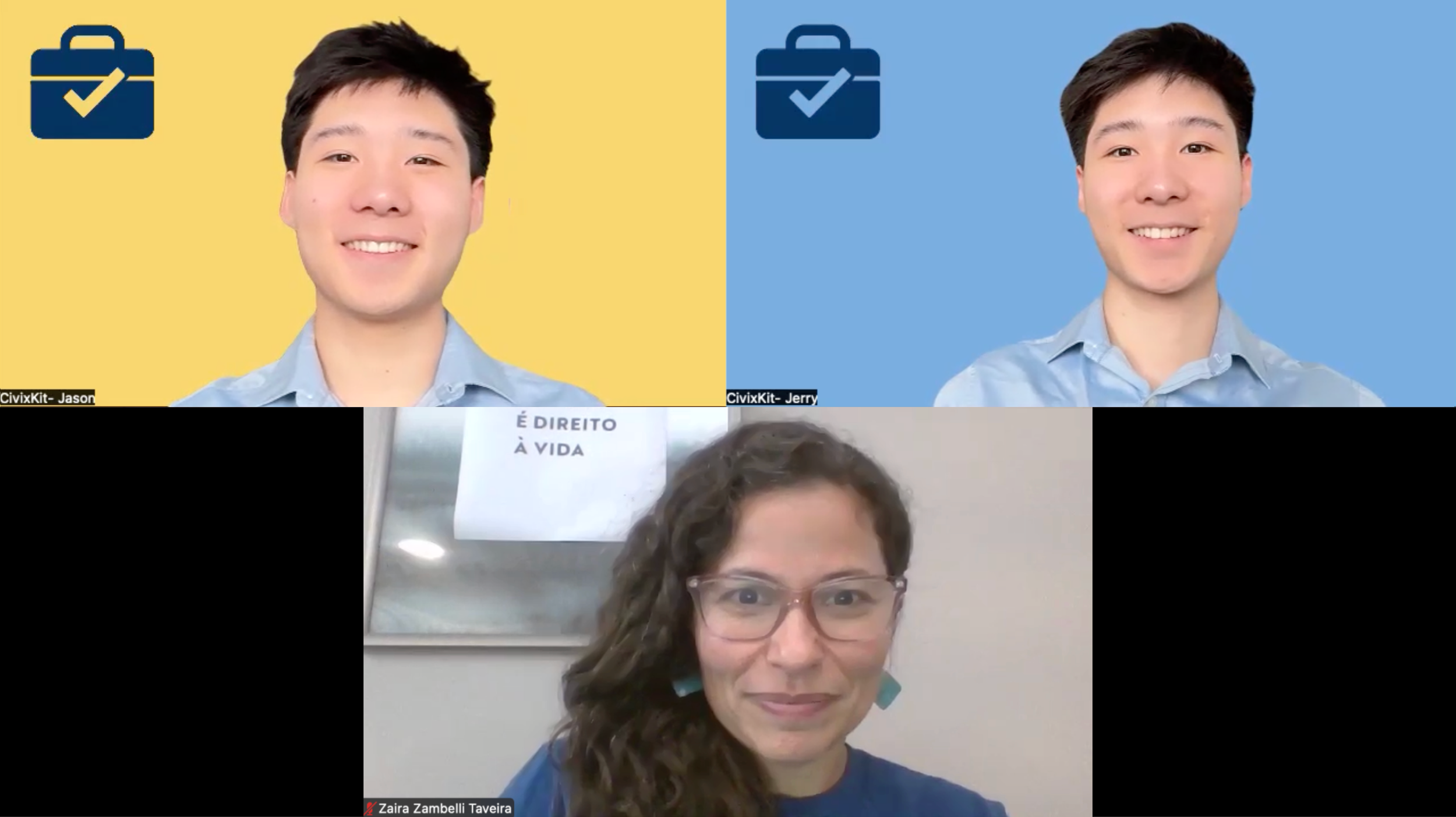
CivixKit in interview with Land is Life.
With Ms. María Camila Alzate Férez (Global Communications Manager) and María Camila Alzate Férez (Global Communications Manager) not shown.
Q: How does Land is Life approach outreach and collaboration with Indigenous communities, and what does that process look like in practice?
“Our approach is based on long-term relationships, cultural respect, and flexibility. The majority of our budget supports Indigenous Peoples’ organizations and communities, reflecting our commitment to equitable and direct funding. As already mentioned, all of our programs are led by Indigenous Peoples and reflect priorities identified by their communities. We avoid rigid project frameworks or short-term metrics in favor of listening and adapting to real needs. We provide stipends and practical support to Indigenous Peoples’ leaders, allowing them to continue their essential work without sacrificing their well-being or that of their families.”
— Land is Life Team
Q: How important is storytelling in your campaigns, and what process do you use to select which stories and storytellers to highlight in a way that strengthens advocacy efforts while fully honoring Indigenous perspectives?
“Storytelling is absolutely central to our work. For Land is Life, stories are not just communication tools, they are acts of self-determination. They allow Indigenous Peoples to define their own realities, resist invisibility, and share their struggles and hopes on their own terms.”
— Land is Life Team“When we select which stories to highlight, the process always starts with Indigenous partners themselves. We never “choose” stories from the outside; we co-create them. Indigenous Peoples’ organizations and local leaders decide what they want to share, how they want to be represented, and what message they want to convey. Our role is to amplify, not interpret, to ensure that the storytelling process upholds Free, Prior and Informed Consent (FPIC), cultural integrity, and safety.”
— Land is Life Team“We use storytelling to connect advocacy to lived experience. Data and reports are essential, but it’s people’s voices, their words, images, and testimonies that move hearts, shift narratives, and build solidarity across borders.”
— Land is Life Team“Practically, that means we take time to listen, contextualize, and seek permission at every step, from content creation to publication. This collaborative approach not only ensures ethical storytelling but also strengthens advocacy, because the narratives we share are authentic, collective, and grounded in truth.”
— Land is Life TeamQ: Land is Life’s work spans across Africa, the Arctic, Asia, and Mesoamerica. How did you scale from local initiatives to international campaigns? What differs across continents, and how have you adapted your model in each context?
“Our scaling model is organic. So that is to say, we don’t impose any solutions; we support self-determined actions. We recognize wicked problems and that solutions that may be effective in one area/geographical location cannot be copy and pasted into another one. So, all of our programs are led by Indigenous Peoples and reflect priorities identified by their communities. Our governance is Indigenous-led and accountable to Indigenous Peoples, who guide our strategy and ensure transparency. Whether responding to a human rights emergency or an opportunity to influence national or global policy, we act quickly, with care, and in solidarity.”
— Land is Life TeamQ: What strategies have been most effective in protecting Indigenous lands and rights?
“Land is Life is a global coalition of Indigenous Peoples that works to advance the self-determination and collective rights of Indigenous Peoples in the world’s seven socio-cultural regions. Our mission is to advance a process of dialogue and strategic action to achieve legal recognition of, and respect for — at the local, national and international levels — Indigenous Peoples’ rights to self-determination and collective ownership of their territories, lands, resources and knowledge.
Our work strengthening Indigenous Peoples’ self-determination through community-led Free, Prior and Informed Consent (FPIC) protocols represent a transformative approach to development. By helping Indigenous Peoples establish their own protocols based on traditional decision-making processes, Land is Life creates a framework that ensures Indigenous Peoples can determine their own priorities while maintaining control over their territories.”
“Our support for Indigenous women’s leadership acknowledges their vital role in preserving traditional knowledge and protecting territories. Through direct support to women-led initiatives and our fellowship program, we’re nurturing the next generation of Indigenous women leaders.
Finally, by amplifying Indigenous Peoples’ voices in international forums—from UN meetings to climate and biodiversity negotiations—we ensure that they have a seat at the tables where critical decisions affecting their lives and territories are made.”
“In essence, Land is Life’s importance lies in its commitment to Indigenous-Led solutions that recognize the inextricable connection between Indigenous Peoples’ rights and the ecological sustainability of our planet. Our collaborative approach empowers Indigenous Peoples to tackle daily threats to their territories and livelihoods, while simultaneously amplifying their voices in decision-making spaces. By connecting grassroots activism with national advocacy and international policy engagement, we strengthen rights recognition across all governance spheres while ensuring Indigenous Peoples remain the leaders of their own defense and development.”
Q: Land is Life has spearheaded several extremely impactful campaigns. Could you walk us through the journey of two campaigns — from its initial idea to full execution — and share what, in your view, made it particularly successful?
“One of the campaigns I’m most proud of is the GOMA Campaign, which we developed in early 2024 in response to the humanitarian crisis in Goma, Democratic Republic of the Congo (DRC). At that time, intense clashes between the armed forces and armed groups had displaced thousands of families (63% of them women and children). Among those most affected were Indigenous Peoples such as the Batwa and Bambuti, who suddenly found themselves without food, shelter, or access to healthcare.
In response, Land is Life, in partnership with Azimuth World Foundation and Focus Droits et Accès, a local women’s organization in the DRC, launched a fundraising campaign to deliver dignity kits for women and girls, ensure emergency access to water and hygiene supplies, and provide psychological first aid.
The campaign’s success came from its authenticity and collaboration. Focus Droits et Accès led the on-the-ground response, providing accurate and timely updates, photos, and testimonies, while Land is Life and Azimuth mobilized international awareness and donations through a coordinated digital strategy across Instagram, Facebook, X, LinkedIn, and newsletters.
We focused on storytelling that humanized the crisis, using carousels titled “Our Eyes on Goma” to show the faces and resilience of the people behind the statistics.
The campaign achieved its goals: it raised funds for emergency aid and increased global engagement by more than 25%, bringing visibility to a crisis that was largely underreported internationally.
The Panama campaign took a different form but shared the same spirit of solidarity and action. Between June and August 2025, Land is Life coordinated a comprehensive advocacy campaign to address the violence and repression faced by Indigenous Peoples Ngäbe-Buglé, who were being criminalized for peacefully mobilizing against government-backed legislative reforms.
Our response combined national advocacy with international visibility:
We supported Yanel Venado, an Indigenous leader from Ngäbe-Buglé, to participate in the 18th Session of the Expert Mechanism on the Rights of Indigenous Peoples (EMRIP), where she presented a statement denouncing the situation.
We submitted reports to multiple UN Special Rapporteurs and a request for a thematic hearing before the Inter-American Commission on Human Rights.
We also explored long-term strategies, including support for strategic litigation and legal defense for cases of arbitrary detention.
Both campaigns were successful because they were rooted in partnerships with Indigenous leaders, guided by real-time information from the ground, and designed to amplify Indigenous voices in spaces of power. Whether through emergency fundraising or international advocacy, the key to their impact was the same: centering Indigenous leadership and building solidarity across regions.”
— Land is Life TeamDescription: A messaging brief/communications playbook that clearly outlines and organization’s identity & key message
Use Case: Used to clearly define the organization’s role and credibility to external audiences (partners, funders, media), while ensuring everyone internally communicates about it in a consistent and aligned way.
Takeaway:
Structure builds clarity.
Use clear sections (who we are, mission, origins, priorities, what we do) so audiences can quickly understand the organization.Define what you are and are not.
Strong briefs explicitly clarify positioning (e.g., “not just X, but Y”) to differentiate from similar organizations.Answer unspoken questions.
Include elements like origins, governance, and past work to address credibility, uniqueness, and why the organization matters.
Description: A digital brand manual that provides the complete behind the scenes look for how Land is Life presents itself across platforms. It outlines clear guidelines for tone of voice, logo usage, typography (what fonts to use and when), color palette (specific hex codes), imagery styles, and graphic elements (even Tote Bag Design!), alongside rules for composition and templates.
Use Case: Useful when an organization has multiple people creating content and is publishing regularly across platforms such as Instagram, reports, and presentations, and needs clear, standardized rules (fonts, colors, layouts, tone) so every post, graphic, and document remains consistent regardless of who creates it. Critical for maintaining professionalism, ethos, and a unified public presence.
Takeaway:
Strong branding is built through intentional detail, not just good design. From all our conversations, one through-line is “every detail matters.” Seemingly small decisions like a fixed typography system like League Spartan for titles and Avenir for body text, or reserving Burgundy Red only for key brand elements, ensures every piece of content looks cohesive and professional. Just as important, a clear system makes high-quality communication scalable, so it does not depend on who is creating the content.
There should be distinct design variations for different contexts, each with a clear purpose. For example, Land is Life assigns specific color palettes to different programs, such as one for the Indigenous Women’s Program and another for Security or Advocacy work, allowing audiences to immediately recognize the focus of each piece. This shows that branding should not be one-size-fits-all, but structured so different initiatives are visually distinct while still remaining within a unified system.
About Us Brief
Digital Branding Guide
Description: A structured presentation template with pre-designed layouts for agendas, timelines, data representation, and storytelling. It is a prime example of a well-organized and clear presentation/pitch deck used in both internal and external presentations.
Use Case: CSO teams attempting creating presentations and pitch on advocacy campaigns and policy proposals.
Takeaway:
Understanding is key. Presenting information in a visually compact way, especially content that cannot be easily retained in sensory memory, such as time-based agendas (page 4) and step-by-step timelines (page 7), makes presentations easier to follow.
Built-in assets reduce friction. Including fonts, color palettes, icons, and editable infographics directly in the template allows users to create polished slides without redesigning from scratch.
Attached below are both exemplary exemplars (no pun intended). A letterhead (left) and report template (right). Both are designed for easy use, allowing you to insert your name, date, and organization while preserving consistent formatting and structure. Enjoy! :)