

Access Now defends and extends the digital rights of people and communities at risk.
By combining direct technical support, strategic advocacy, grassroots grant-making, and convenings such as RightsCon, they fight for human rights in the digital age.
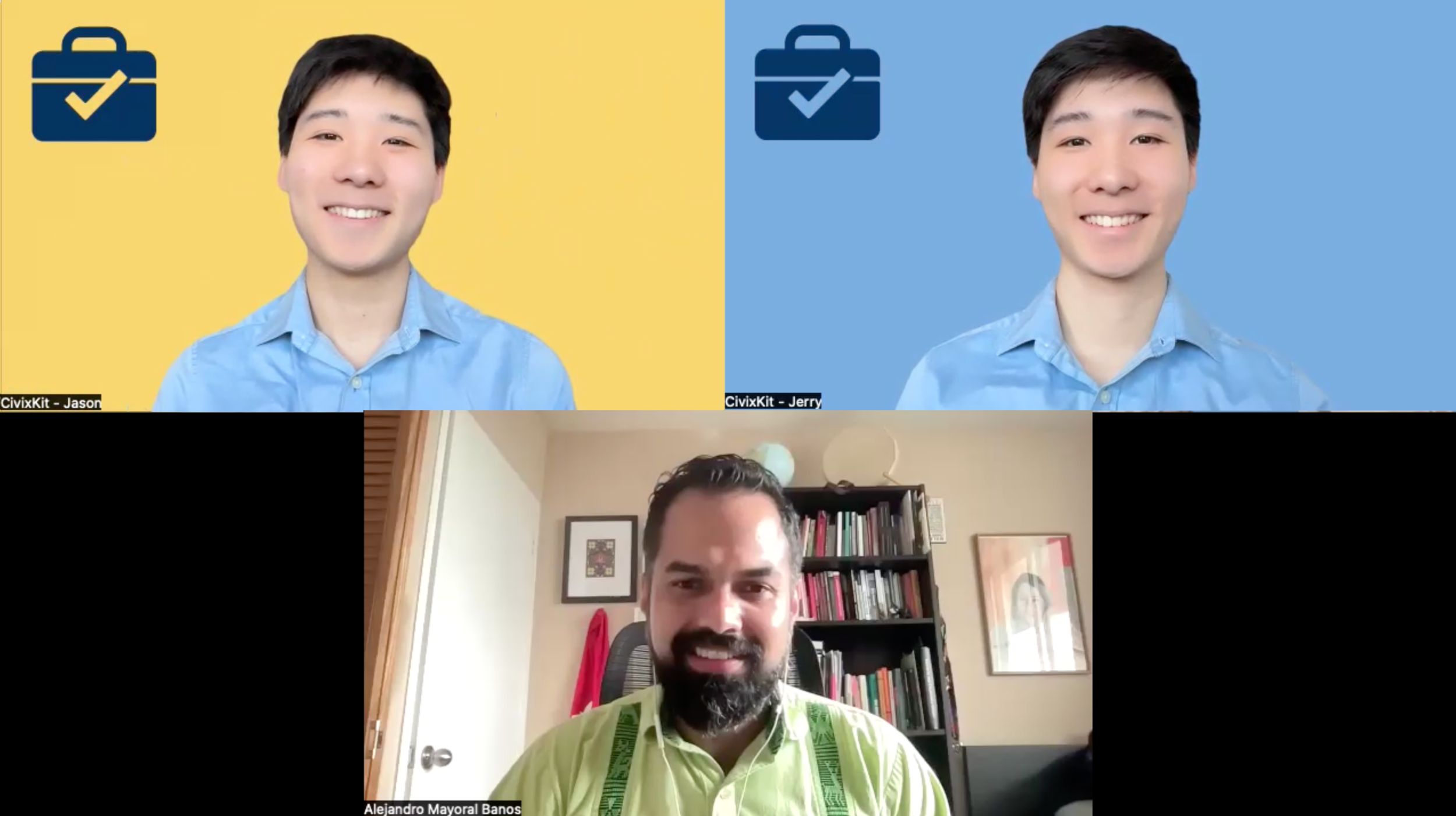
CivixKit in interview with Access Now.
With Mr. Alejandro Mayoral Baños (Co-Executive Director).
The following testimony/advice are provided by Mr. Baños.
Q: Could you walk us through the anatomy of a successful Access Now, from the initial idea to its execution, and in your view, what ultimately makes such a campaign effective?
“The Keep It On campaign, the internet shutdown campaign, which has been one of our most successful, is rooted in our early work. About 15 years ago, we were talking about internet shutdowns in Iran, where the government shut down the internet to control human rights defenders and journalists trying to raise awareness. We began to understand how internet shutdowns were used against human rights, and how shutting down infrastructure creates widespread issues across contexts. Especially with digital authoritarianism, we saw how digital technologies were being used to reinforce authoritarian strategies.”
“One of the most important steps was launching the campaign 10 years ago at RightsCon in San Francisco to bring global awareness. We knew we could not do this alone. The Keep It On campaign is not just led by Access Now, but by a network of organizations that provide local and regional insight into what is happening on the ground. Building this network was critical, as these organizations understand the language, culture, and political context of shutdowns. Today, the network includes more than 300 organizations.”
“Governments, particularly in democratic countries such as those in Europe and Canada, are also deeply concerned, as internet shutdowns are closely tied to democracy. They are often used by autocratic governments to enforce control, so international pressure from democratic states plays an important role in defending and protecting internet infrastructure.”
“That is when we began thinking about how to stop internet shutdowns. Our first approach was reactive, providing tools, proxies, and early VPNs to help people stay connected. But we realized we needed to do more and create lasting change.”
“Another important aspect has been involving governments and the private sector. In the Keep It On campaign, partners like Cloudflare and Microsoft provide real-time insights from the infrastructure level when they detect disruptions in connectivity. This multi-stakeholder approach has been essential in advancing the campaign.”
“Finally, it has been crucial for the campaign to evolve with changing global contexts. Initially, the focus was on governments shutting down the internet at a national level. Now, shutdowns also occur during conflicts, where disabling internet access has become a strategy of warfare. In these situations, protecting internet infrastructure is even more critical, as shutdowns often lead to serious human rights violations at the grassroots level.
It is therefore crucial to protect at that level, especially in the current geopolitical context, where these considerations are increasingly important.”
Q: RightsCon convenes activists, policymakers, and technology leaders from around the world as a leading summit on human rights in the digital age. What makes in-person convenings like this uniquely effective, and what advice would you give to those looking to organize similar spaces for collaboration and impact?
“I have a lot to share about RightsCon because I am a product of it. I became involved with Access Now through RightsCon. In 2018, RightsCon was held in Toronto. At the time, I was leading the Indigenous Friends Association, a grassroots organization focused on digital inclusion for Indigenous communities in Canada. We received funding from the Ontario Trillium Foundation, which enabled us to attend. That is how I became part of the RightsCon and Access Now communities.”
— Mr. Baños. (Co-Executive Director) “From my experience, it was invaluable as a grassroots organization to connect with global actors. I would not have otherwise had the opportunity to engage with companies like Meta, Google, Microsoft, or government representatives. Being able to connect not only within Canada but with individuals from Sweden, Denmark, and many other countries working on similar issues was incredibly impactful. It also allowed us to learn from other civil society organizations and the strategies they use.”
— Mr. Baños. (Co-Executive Director) “RightsCon is a vital space. A common question is why host an in-person event about technology when it could be online. RightsCon was online for three years during the pandemic. What we learned is that the most meaningful conversations do not happen during sessions, but in informal spaces, in hallways, between sessions, and over meals. That is where much of the collaboration happens. For anyone organizing similar events, do not focus only on formal sessions. Prioritize informal spaces where people can meet and build relationships.”
— Mr. Baños. (Co-Executive Director) Q: What concrete steps do you take to ensure an event is truly inclusive, from who gets to shape the program to how participation is structured?
“RightsCon Costa Rica in 2023, is that participants do not want rigid hierarchies where a single “expert” leads the conversation. Civil society actors bring deep expertise, and their voices must be equally valued.”
“We also enforce structural principles. Panels must include geographic diversity unless the topic is region-specific. We also do not allow panels composed solely of white men, ensuring broader representation of voices that are often excluded.”
“At RightsCon, we have moved away from keynotes. The goal is not to position one person as the authority, but to create space for dialogue. The program is community-led. We do not decide which sessions are included. The community participates in curating the program, ensuring diverse perspectives, even though this can create tension across sectors.”
“Another important aspect is location. We aim to host RightsCon in places that are accessible and inclusive. For example, in Costa Rica, a visa policy change created barriers for many participants. Since then, we have been more intentional about working with governments that enable broader participation. In the current context, this affects where we choose to host future events.”
Q: For many grassroots organizations, funding remains a significant barrier, whether due to limited awareness of opportunities, capacity constraints, or scale. In the context of Access Now’s grant programs, such as Project Core and discretionary grants, what key factors distinguish successful applicants from those who are not funded?
“One of the most important things I learned, especially in the new reality that we are facing, is that funding is limited. Last year, there was a massive impact on civil society globally with the executive orders of Trump. About 25% of global funding for civil society disappeared overnight. Even though it was not directly targeted, it was about USAID, development funds that are very related to civil society. So having a 25% financial loss is massive, like any other business in the world. If funding was limited before, now it is even more.”
“One thing you need to be very aware of in a successful grants application is perseverance. You are not going to get the first funding you apply for. It is about perseverance and not getting demotivated when you get rejection. The most successful grantees are very persistent, sending requests over and over again, because it is not about the idea. There are so many grant applications, and we cannot afford to support everyone. So it is about perseverance.”
“Another important point is how you are adapting to the new reality. If you are recycling something from two years ago, when the world was completely different, that does not work. Right now, it is about new ways of creating change. For example, if your work does not touch on AI and its effects across issues, you are missing what is happening. It is not just about technology, but how it is disrupting the economy, education, and social issues. Applications need to reflect the current context.”
“The second thing is that you are not isolated. If you say you are by yourself and doing everything on your own, that means you are not doing your job of creating an ecosystem around your topic. It is important to show the networks you are building and how you are sharing the knowledge you acquire through the grant. This shows that the investment is not just in one organization, but in the entire ecosystem.”
“Finally, scope is very important. Sometimes we love to dream in a grants application and say we are going to change the world. But if you dream too big, it will likely be rejected because it is not feasible. It is better to be very specific about what you want to achieve. If you say you are going to change how youth in Canada think about democracy, that is too general. That is an aspiration, not a project. Grants require clear, specific objectives.”
Q: Issues surrounding digital rights are often complex, involving technical language and nuanced concepts. How do you communicate these issues in a way that resonates with the public while preserving their depth and accuracy?
“One is that things are changing very rapidly. In the last year, after the executive orders in the US, people are more curious about how tech is involved in politics. There was a visual moment when Trump was with CEOs of major tech companies in the same room, and people started asking, what is going on here? Now we see how intrinsic democracy and tech are.”
“So the first part is that this shift creates an opportunity for those working in digital rights. People are more curious, and we can use that to express concerns and shape how we move forward.”
“Now there is interest from both sides. Labor, land, and Indigenous rights movements are seeing how tech is used against them, but also how it can be used to create awareness and campaigns. So the technical aspect becomes essential, and translation is critical. Part of this is also how we communicate. We are investing more in visuals. We do not want a 20-page report that no one will read. If you put that on social media, very few people will engage. So it is about translating those documents into smaller summaries that people can engage with. And we are seeing more engagement overall.”
“Maybe people were not able to put it into words before, but they could see there is something here. We cannot be naive. Now, not just youth but older generations are more aware of how social media is changing elections, shaping perception, and opening discussions. A campaign run by Elon Musk on a specific issue can create controversy in a country and trigger broader conversations.”
“The second aspect is that the digital rights ecosystem can sometimes be very elitist. We use technical language that makes it difficult for non-technical people to engage. So it is important to become translators of these issues, connecting digital rights to labor rights, environmental rights, land rights, and Indigenous rights. For example, I struggle with bringing Indigenous rights into digital rights and how they intersect. There is a lot of translation missing. The urgency of what is happening globally is creating momentum for this translation, because before there was little interest.”
“Be specific. We are all big dreamers and want to improve the world, but it is important to take the time to define your focus clearly. Start with one small piece at a time. Otherwise, you risk becoming overwhelmed. Right now, it is those small, focused actions that will create meaningful impact in the future.”
Q: In your experience, which formats have been most effective in capturing attention and raising awareness: social media platforms such as Instagram and X, or more traditional formats like expert-driven reports and publications?
Q: In terms of content, what have you found to be most effective in shifting public opinion or influencing policymakers: direct testimony and human stories, or data-driven approaches such as statistics, reports, and demonstrations of public support?
“Depending on the topic and the jurisdiction, there are a lot of nuances. For example, one campaign that is creating more awareness and momentum with politicians, particularly in Europe, is Protect, Not Surveil.”
“This type of awareness is very effective with policymakers because they often come with good intentions, but sometimes do not know the facts, and feel that the only way to protect citizens is through surveillance.”
“People are aware of safety, and across the political spectrum, they are concerned about the safety of citizens. What we are trying to do is create awareness that yes, you can protect your citizens, but that does not mean you need to surveil them.”
“Going back to the Keep It On campaign, when it becomes public that there is an internet shutdown in places like Pakistan, Afghanistan, or Nepal, you start seeing reactions from governments. They realize they are attracting attention from international media, and that has created change. In some cases, they turn the internet back on or stop using these practices.But again, it depends on the issue and the moment in time.”
“What we are seeing becoming less effective in the current geopolitical context is letters, for example, letters of support. They are not effective anymore. What we are seeing with many allies is that they can create targets for people.”
“Right now, there is no real public pressure from these actions. If everyone signs a petition against a government, there is not necessarily pressure to respond. On the contrary, you are providing information to governments about who is organizing.
“This can create the opposite effect. You are essentially saying, “here are the people that are against you,” and we are seeing this as counter-effective to the purpose of these initiatives.”
Q: While raising awareness is an important first step, it does not always lead to action. From your experience, what strategies have been most effective in moving individuals from awareness to meaningful, sustained engagement?
“One thing we have been trying to do is engage more with grassroots. As you said, the first step is awareness, but the next step is how we influence policymakers.”
“At the international level, bodies are not enforceable at the national level, so the focus is on influencing national jurisdictions. What we have been doing is bringing testimonies from grassroots organizations to create permanent changes in national regulations.”
“For example, in Colombia and Peru, we provided feedback on government AI policies. We reviewed how the policy text would be presented to the legislative body and provided input on key elements and language that should be included. This is about bringing grassroots perspectives into policy to create lasting change.”
“Another important aspect is strategic litigation. For example, if someone is a victim of spyware, their testimony can help provide protection for future victims. We have provided amicus briefs in cases against spyware companies, bringing in testimonies of victims, while ensuring privacy, to support future protections.”
“Specifically, we were involved in a case with WhatsApp, where we stood alongside Meta against a spyware company. The spyware violated WhatsApp’s terms, and we provided testimonies of victims to support legal action against NSO Group, the owner of Pegasus. We won that case, although it is now under appeal.”
“This is about bringing the voices of grassroots actors, often journalists in global majority countries, into spaces where they would not otherwise have access, and using those testimonies to create real legal and policy change.”
Policy Submission Guide
Description: A policy submission from Access Now on India's Digital Personal Data Protection Rules, 2025. It covers 15 specific rule critiques using a structured format: rule-by-rule feedback identifying what's positive, naming specific gaps with evidence, and recommending exact language changes.
Use Case: This serves as a model for youth advocates, civil society organizations, and policy contributors looking to draft high-impact government submissions. It is especially useful for those preparing formal feedback on legislation, as it demonstrates how to structure arguments, ground claims in legal provisions, and translate abstract rights (like privacy or accountability) into specific, actionable rule changes.
Takeaway:
Each comment begins by acknowledging what works (“we welcome”), then identifies gaps (“however”), and ends with a clear recommendation (“we recommend”). This positions the submission as collaborative rather than adversarial, increasing the likelihood that regulators engage with and adopt the feedback.
Do not just point out problems. Write recommendations in a way that policymakers can directly implement. For example, instead of saying “Rule 12(3) is too vague,” specify: “We recommend that Rule 12(3) include clarity on how risks are measured, a prohibition on risky algorithms, and specific accountability mechanisms.” This removes the burden on regulators to interpret or reframe your input.
Human Rights Legal Brief
Description: An amicus curiae legal brief submitted by Access Now to the Constitutional Court of Kazakhstan, arguing that state-imposed internet shutdowns violate international human rights law. The brief combines empirical evidence, United Nations frameworks, and treaty analysis to demonstrate that shutdowns fail the legality, necessity, and proportionality standards, and also outlines the responsibilities of private companies under the UN Guiding Principles on Business and Human Rights.
Use Case: This serves as a model for advocates, legal practitioners, and policy contributors preparing rights-based legal submissions in constitutional or international law contexts. It is especially useful for those challenging state actions, as it demonstrates how to base any argument in binding legal frameworks (e.g., ICCPR, ICESCR), integrate global institutional authority (UN resolutions and rapporteurs), and connect abstract rights violations to concrete, real-world harms.
Takeaway: In our conversation, one idea that was stressed was the funnel strategy. Start with global consensus, then narrow to your target country’s own obligations. Open by documenting what multilateral, trusted bodies (15+ UN resolutions), regional institutions (EU Parliament, ECOWAS courts), and other domestic courts (India, Nigeria, Guinea) have all already said about the issue. Then cite the specific international treaties your target country ratified (ICCPR, ICESCR). Then apply those treaty obligations to the specific harms at stake. This ordering works because it shows your country is an outlier: everyone else has already accepted this standard, and your country is bound by the same treaties. It makes non-compliance look inevitable rather than debatable.
Data Protection Rights Educational Toolkit
Description: A practical guide from Access Now explaining 8 specific data protection rights under EU's GDPR (right to information, access, rectification, erasure, restrict processing, object, data portability, and explanation). Includes plain-language explanations of each right, step-by-step instructions on how to exercise them (with template email), and a complete directory of EU data protection authorities with contact info for filing complaints.
Use Case: This serves as a model for advocates, educators, and organizations translating complex legal frameworks into accessible, user-facing resources. It is especially useful for those designing rights-awareness tools, because it demonstrates how to simplify legalse, structure information around user actions, and provide clear, practical pathways for individuals to exercise their rights.
Takeaway: Use the Explain, Action, Template strategy. Start by clearly explaining the right in plain language (what it is and when it applies). Then immediately show the user how to act on it (who to contact, what to request, what to expect). Finally, provide a ready-to-use template or example (e.g., a sample email or real contact points). This structure works because it removes friction at every step, turning abstract rights into concrete, executable actions. Moreover, visual hierarchy also works extremely well. Use consistent visual hierarchy, such as colour-coded sections, to clearly distinguish explanation, action steps, and supporting information.
Policy Objection Email Template
Description: A formal submission letter from Access Now to India’s Department of Telecommunications responding to draft Telecom Cyber Security Rules, outlining key legal concerns and proposing specific rule-by-rule amendments.
Use Case: For advocates drafting formal policy submission emails to government bodies that combine legal critique with clear, actionable recommendations.
Takeaway: Use legal constraint framing to limit government power. This submission at multiple points of the letter/email argues that certain provisions are not just harmful, but outside the permissible scope of the parent statute and thus unlawful. By linking critiques directly to the Telecommunications Act and constitutional principles like proportionality, it shifts the argument from “this is a bad policy” to “this cannot legally be done.” This is reinforced with precise fixes, such as removing specific phrases or requiring judicial approval, making each objection both legally grounded and immediately actionable.