
We are a global network supporting people facing some of the toughest challenges in the world.
CARE International is a leading humanitarian and development organization committed to fighting poverty, reducing inequalities, and helping to save lives in over 100 countries.
From wars to natural disasters and economic crises, we support people facing some of the toughest challenges. We focus on women and girls because they are often hit hardest, yet they have the power to lead lasting change in their communities.
By working alongside women and girls and listening to their solutions, we support them to make change where it is needed most. We start where crises are happening and don't stop until we succeed in making global change.
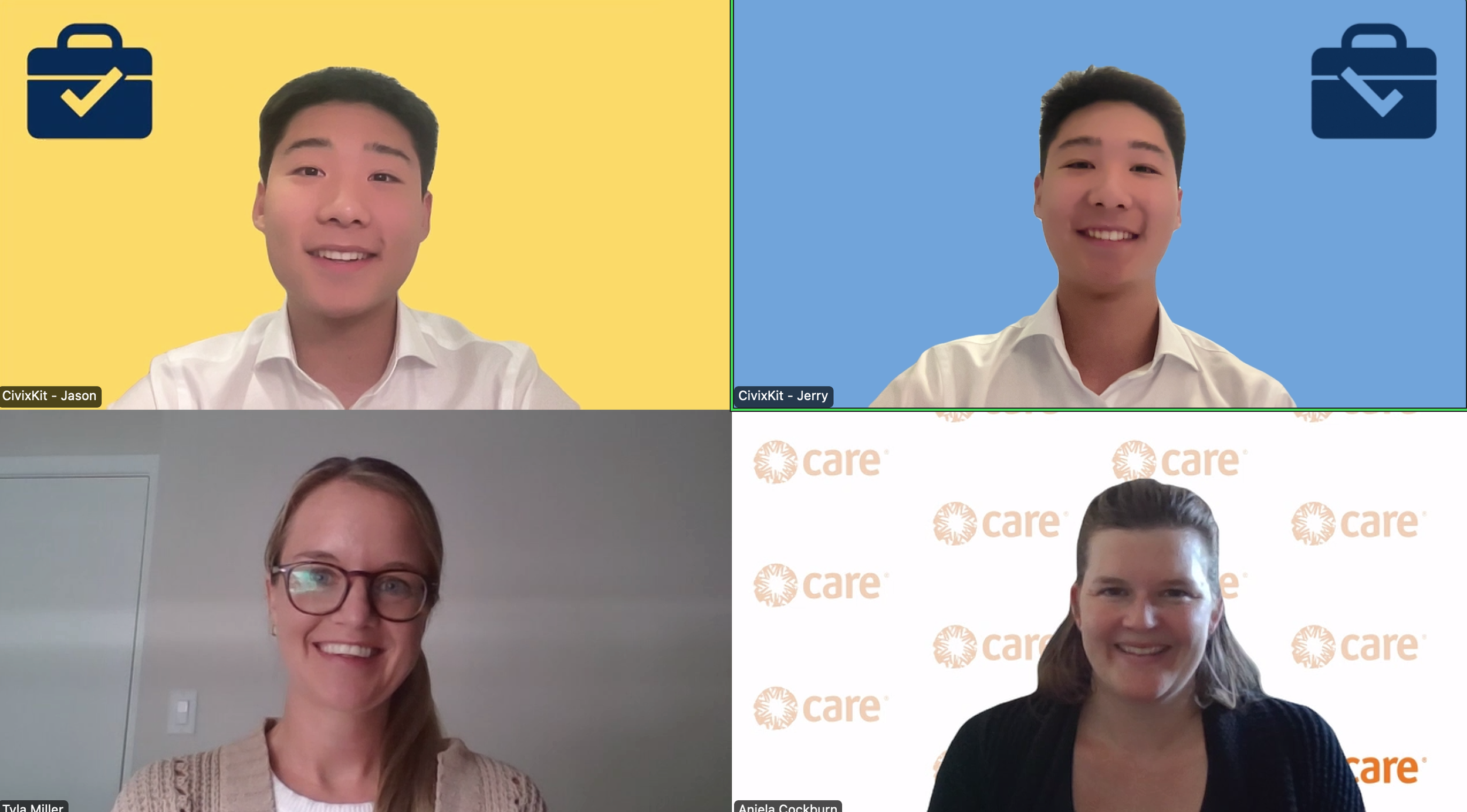
CivixKit in interview with CARE.
With Ms. Tyla Miller (Pubic Engagement Officer)
and Ms. Aniela Cockburn (Communications and Outreach Manager).
Q: CARE’s projects rely on diverse partnerships, from universities to advocacy organizations. How does CARE decide who to partner with, and what does the collaboration process look like from initial outreach to implementation?
“Partnership is at the heart of CARE’s programming, because we know that no single organization can achieve significant impact alone. We start by reviewing what partnerships would be most beneficial for a specific project to succeed. For example, in Carbon for Good Vietnam we bring in the University of British Columbia (UBC) for their high academic standard and the Center for International Forestry Research and World Agroforestry (CIFOR) for forestry research and technical knowledge, while CARE contributes deep experience in community engagement and women-centred programming.”
— CARE Team 
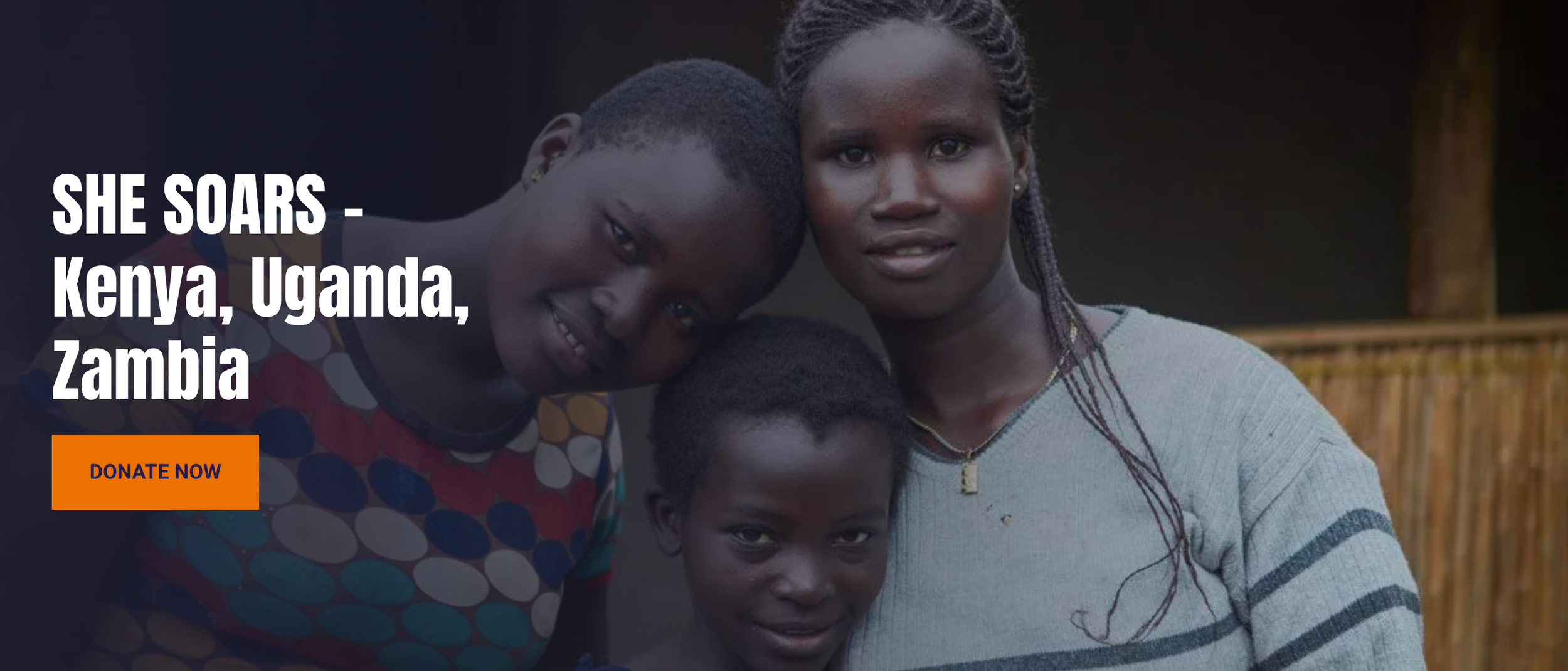
“Similarly, in SHE SOARS, partnerships with Restless Development and the Center for Reproductive Rights ensure strong youth engagement and legal advocacy alongside CARE’s programming with local women’s rights organizations.”
— CARE Team “Similarly, in SHE SOARS, partnerships with Restless Development and the Center for Reproductive Rights ensure strong youth engagement and legal advocacy alongside CARE’s programming with local women’s rights organizations.”
— CARE Team Q: CARE Canada receives funding from donors, government, grants, and the CARE International network. How does this funding process work, and how are funds allocated across projects and campaigns?
“CARE Canada’s funding process and distribution … so, as a registered charity, CARE Canada secures funding from diverse sources: individual supporters, institutional donors such as Global Affairs Canada (GAC), philanthropic foundations like the Mastercard Foundation, and other CARE offices.”
— CARE Team “Each source has its own funding process … ranging from competitive proposals for government grants, to co-designed initiatives with foundations, to individual giving campaigns.”
— CARE Team “Once secured, funds are allocated according to donor requirements and CARE Canada’s priorities. Government and foundation grants are usually tied to specific projects with detailed budgets. CARE manages these funds carefully, balancing restricted project-based funding with flexible resources that support innovation, local partnerships, and operational capacity. Across all streams, we aim to maximize the resources reaching communities while maintaining oversight, compliance, and accountability with donors.
— CARE Team Q: CARE has strong experience advancing the rights of women and girls. What guidance would you offer other campaigns on meaningfully integrating a gender lens into their advocacy work
“If you want to make sure your campaign truly supports girls and women, gender equality needs to be considered and integrated at every stage of the work – from the first designing brainstorms, to the final evaluations and analysis. Making sure that women and girls are a core part of the planning is integral, as is including them in the decision-making process, especially those from local communities that are relevant to the campaign.”
— CARE Team “Focus on fixing the big problems, like unfair laws or old ideas that hold women back, not just the easy stuff. Use facts and real stories to help people understand why change matters. Work together with lots of different people, including men and boys, and remember everyone’s experience is different.”
— CARE Team “Be patient … real change takes time and can be tough, but don’t give up. Keep checking if your efforts are actually helping, and make sure your own group treats everyone fairly, too.
— CARE Team Q: In many projects, CARE places young people at the forefront. How do you ensure that youth are not just participants, but real decision-makers in shaping advocacy work? And what lessons can other campaigns take from that approach?
Q: CARE has a significant public profile and engages thousands of people online. What strategies have you found most effective in transforming social media visibility into tangible awareness and committed advocates?
“Social media is always changing, so we try our best to stay informed on the latest trends and updates. That said, it’s about knowing our audiences and what they’re looking for from us specifically, but also in general: what they’re passionate about, what they want to learn more about, and how they want to make a difference.”
— CARE Team “For example, our One Woman Can campaign in March is all about the incredible impact one woman can have on her family and her community when she has what she needs to be safe, healthy and earn a living. And we want to show that one person—a social media follower, a visitor or our website, etc.—can also make a difference with any action they take, even just by learning more and sharing.”
— CARE Team“We try to find a balance between talking about how we work with women and girls around the world for positive change and connecting that work to the average Canadian … why it matters, why they should care about what happens in other places and how it also affects them here. We’ve found that content and campaigns that seem to resonate the most show the reality of gender inequality and its impacts, while also being hopeful and reinforcing how any action from anyone, anywhere can lead to positive change.
— CARE Team“As we know, knowledge is power. We want to meet folks where they are, so we try our best to translate what can be very complex situations and concepts into more easily understandable and relatable content, such as graphics, animations, and of course through powerful stories. Most of all, we want to share people’s experiences in their own voices whenever possible and ensure that everything we share is empowering and centers CARE’s project participants.”
— CARE Team“Get started with whatever resources you have available now. Seek out accurate information, learn more about the cause you want to support, and engage with organizations in your community who are already tacking similar issues. Trust that with lived experience, you are an expert in your own right and your voice matters. The first step is often the hardest!”
CARE’s Steps to Successful Campaigning
“1) The first step is to think about your goals/purpose for your campaign
2) Identify your target audience: Who are you trying to reach?
3) Define your available budget or resources
4) Make a timeline. You can use a Gantt chart or an excel sheet or a planning
software to make sure everyone knows what to do when
5) Choose your campaign channels like social media, traditional media, email or a
virtual or in-person event
6) Create and launch your content. Make sure it’s consistent and make sure you
have a compelling CTA (Call to Action) to get people’s engagement
7) Monitor and optimize as you go with the help of social media or Google
analytics.”
Q: What advice would you give youth-led campaigns trying to attract media attention, and what makes a press release stand out to journalists while staying clear and engaging?
To get media attention your content/story has to be newsworthy and current
Choose the right media outlet for your content. For example, if your campaign is local, try and reach out to community newspapers and radio stations.
A press release needs to have a good hook, something to get a journalist’s attention. You can tie your story in with a current event or with an event that’s been in the news or a special day like Day of the Girl on October 11.
Do your research on the journalist you want to reach out to make sure you read some of their previous coverage and make your pitch as personal as possible and not “copy and paste”.